 By Rising Star Stocks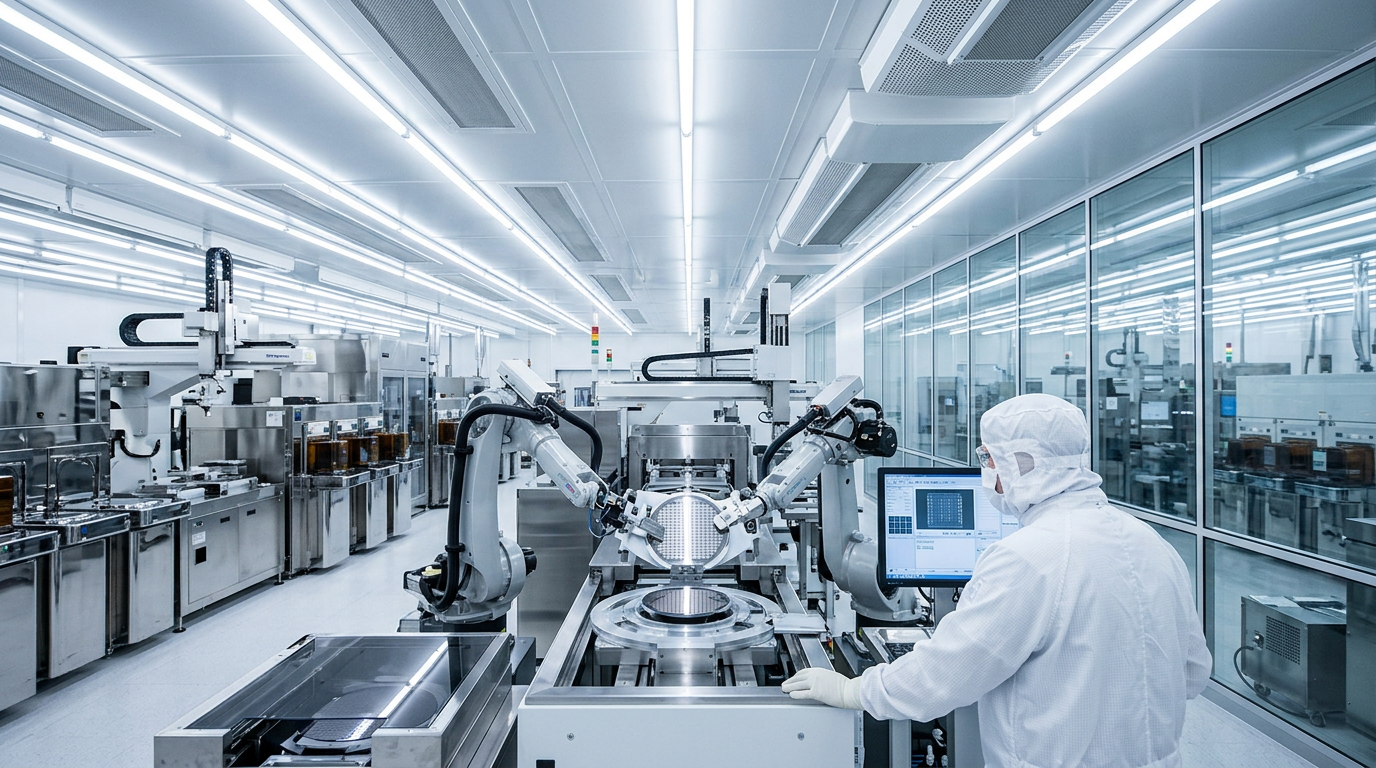
May 14, 2026
The Foundry Running the AI Economy
As hyperscalers pour $725B into AI infrastructure in 2026, one company makes it all physically possible.
There’s a stock sitting at the absolute center of the AI buildout that most people still think of as a ‘chip company.’ That framing undersells it by a factor of ten.
Taiwan Semiconductor Manufacturing (NYSE: TSM) doesn’t design chips. It manufactures them — for Nvidia, Apple, AMD, and virtually every AI accelerator being deployed across the world’s largest data centers right now. No TSMC, no AI boom. It’s that simple.
The Numbers Don’t Lie
Q1 2026 results were hard to argue with. Revenue hit $35.9 billion — up 40.6% year-over-year — beating consensus estimates of around $35.5 billion. Net income surged 58.3% to NT$572.48 billion, extending an eight-quarter streak of double-digit earnings growth. Gross margin reached a record 66.2% — well above the guided 63–65% range — with advanced nodes (7nm and below) accounting for 74% of wafer revenue.
Management raised full-year 2026 revenue growth guidance to above 30% in USD terms, up from the original “close to 30%” issued in January. Q2 guidance calls for $39.0–$40.2 billion in revenue — roughly 10% sequential growth. For context, full-year 2026 revenue is now expected to approach approximately $158 billion.
That’s not a company riding a trend. That’s a company defining one.
Trump’s Iran Smokescreen
The headlines scream about oil and regime change in the Middle East. But behind the scenes, President Trump is about to unleash something far more shocking in the homeland.
You won’t hear about it on Fox Business or CNBC.
But it’s about to have a seismic impact on the wealth of every American patriot.
It’s the boldest initiative of President Trump’s second term by far – and it’s not even close.
To find out why, and how it could affect your financial future – click here immediately.
What’s Actually Driving This
The four largest US cloud providers — Alphabet, Amazon, Microsoft, and Meta — have collectively committed to roughly $725 billion in capital expenditure for 2026, up 77% year-over-year from 2025’s record levels. That number has continued rising as each company reported Q1 earnings and raised guidance. A Counterpoint Research analyst told CNBC that AI chip demand has pushed TSMC’s manufacturing capacity to its limits, adding that this sold-out environment could remain a defining characteristic of the semiconductor industry throughout 2026.
CEO C.C. Wei pointed to a shift from generative AI to agentic AI workloads — systems that don’t just respond but act — which he said consume meaningfully more compute per task. He raised TSMC’s long-term forecast for AI accelerator revenue to a compound annual growth rate in the mid-to-high-50% range from 2024 through 2029, up from a prior view of around 45%.
Worth noting separately: TSMC’s HPC segment — which includes AI accelerators — accounted for 61% of total Q1 2026 revenue, up from 46% in Q1 2024. That’s a structural shift that happened inside of two years and shows no sign of reversing. The company is simultaneously building new 3-nanometer fabs in Taiwan, Arizona, and Japan, and ramping 2-nanometer capacity that entered high-volume manufacturing in Q4 2025. The 2026 capex plan now sits at the high end of a $52–$56 billion range, up from $40.9 billion in 2025 — a potential increase of up to 37% in a single year.
The Risk You Have to Respect
TSM has delivered over 103% in total returns over the past twelve months. The stock now trades at roughly 34x trailing earnings — elevated relative to its 10-year historical average of around 21x. On a forward basis, the multiple drops to approximately 26x, which sits below the semiconductor industry median of roughly 37x forward. Whether that gap closes or widens depends almost entirely on whether AI capital spending sustains its current pace.
Most of TSMC’s near-term revenue flows from a handful of U.S. hyperscalers. If that spending slows — whether due to disappointing AI returns, macroeconomic pressure, or any combination — utilization and pricing power could compress quickly. Management itself acknowledged this dynamic: C.C. Wei said on the earnings call that he remains “very nervous” about committing $52–$56 billion to capex, and that he verifies customer demand directly before doing so.
Geopolitical exposure in Taiwan remains an overhang that institutional investors continue monitoring, even as 224 hedge funds now hold the stock — one of the most significant quarter-on-quarter increases in institutional ownership among mega-cap technology names heading into 2026.
Giving “2022 pre-ChatGPT” vibes (but 10x bigger)
Do you remember when ChatGPT launched, Nvidia soared 1,800% in 3 years, and 500,000 regular Americans became millionaires?
According to Nvidia’s CEO, July 22nd could trigger an even BIGGER explosion of wealth…
Because Tesla is set to unveil a revolutionary technology that could shock the markets…
And be “10x bigger than the largest product in history” according to Elon Musk.
Where This Leaves Investors
Analyst consensus 12-month price targets on TSM currently sit in the $463–$477 range, implying meaningful upside from current levels near $400. The longer-term picture is anchored by TSMC’s mid-to-high-50s AI accelerator revenue CAGR through 2029 and a broader semiconductor market that IDC projects will exceed $1.29 trillion in annual sales by 2026. With 72%+ foundry market share at leading-edge nodes and a customer list that reads like the who’s who of global technology, the competitive position is difficult to replicate on any reasonable timeline.
This is a company that may well be the most consequential infrastructure provider in the global technology industry right now. Whether you’re watching semiconductors, AI, or the broader technology buildout — TSMC is the name worth understanding before the next phase of this cycle takes hold.
Worth a closer look.
This editorial is for informational purposes only and does not constitute financial advice or a recommendation to buy or sell any security. All investments carry risk. Past performance is not indicative of future results. Always consult a qualified financial advisor before making investment decisions.