May 30, 2026
Reshoring Is Finally Showing Up in the Numbers
Comfort Systems USA is stacking backlog as fabs and data centers get built
Reshoring has been talked about for years. What’s different now is that the dollars are landing in contracts, not speeches.
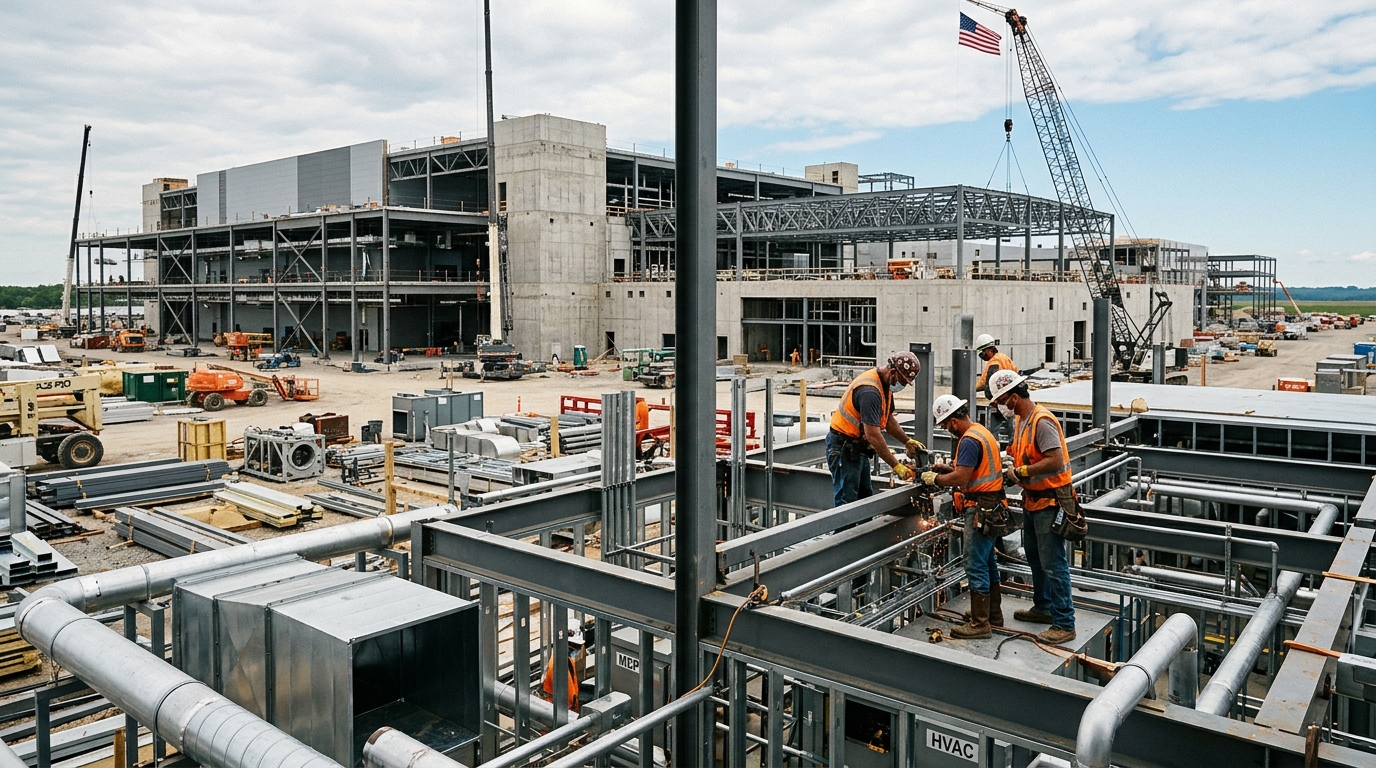
Big domestic builds are happening at the same time: semiconductor capacity, data centers, advanced manufacturing, and a long list of “support” facilities that don’t make headlines but still need to be engineered, wired, cooled, and maintained. That last part is where Comfort Systems USA (FIX) keeps showing up.
Slight tangent, but it matters: investors tend to chase the companies selling the shiny thing (chips, servers, robotics). The less exciting layer – mechanical and electrical work that makes the building function – is often where the steady profitability lives. Not always, but more often than people want to admit.
The AI Bottleneck Nobody Saw Coming
Everyone talks about AI chips.
What’s getting less attention is power.
Goldman Sachs estimates electricity demand tied to AI is rising 15% annually, and many new facilities could face power shortages within a few years. One company already has $1.5 billion in orders for equipment these projects can’t operate without.
The interesting part? Investors still value it like a traditional industrial business.
With the SpaceX IPO approaching, that disconnect may not last.
Where the demand is coming from
High-spec facilities don’t just need square footage. They need uptime. That means redundant power, tight temperature and humidity control, clean environments, complex piping, controls, monitoring… the whole stack.
Comfort Systems sits in that “make it work, keep it working” lane. It’s a contractor, yes – but it’s also a long-cycle service business once these sites are running.
What FIX actually does (in plain terms)
Comfort Systems provides mechanical and electrical contracting services across commercial and industrial projects. Think HVAC, plumbing/piping, controls, and electrical systems – plus ongoing service work after the build.
The reason that matters right now is simple: the projects getting funded in the U.S. are unusually demanding. Fabs and large-scale data centers aren’t “one more office building.” The complexity is higher, the tolerance for mistakes is lower, and the value of reliable subcontractors goes up fast.
The updated numbers (FY 2025)
This is the part I wanted to double-check, because the previous draft had older figures.
- Revenue (FY 2025): $9.10 billion
- Backlog (as of Dec 31, 2025): $11.94 billion
- Operating income (FY 2025): about $1.31 billion
- Operating margin (FY 2025): about 14.4% (operating income divided by revenue)
Two quick notes so the figures don’t get misunderstood:
- Backlog is not “all future revenue.” The company notes that service agreement revenue, service work, and short-duration projects generally do not flow through backlog, so backlog captures only a portion of what may be recognized later.
- Backlog can move fast. FIX ended 2024 with backlog of $5.99 billion, then finished 2025 at $11.94 billion. That’s a dramatic jump, and it tells you where bookings have been concentrated.
Why this is more than “just construction”
At first glance, FIX looks like a straightforward contractor. But what keeps making me pause (in a good way) is the quality of the workstream it’s tied to.
Facilities like data centers and semiconductor-related builds tend to come with:
- Higher technical requirements
- More change orders and specialized scope
- Longer customer relationships (because maintenance and upgrades don’t stop)
- A real penalty for downtime, which pushes buyers toward proven operators
In other words: it’s not simply “more volume.” It’s better volume. And better volume is how margins expand without needing perfect macro conditions.
The Man Who Called Nvidia Before It Soared 1,000% Issues New Elon Musk BUY Alert
Luke Lango was ranked America’s #1 stock picker in 2020. He was mentored by two hedge fund billionaires from the Soros network and trained at Caltech. His readers have had the chance to see gains as high as AMD +8,500%… Nvidia +5,000%… Tesla +3,500%… Palantir +1,000%… and Apple +890%.
One thing I’m watching
The company’s own filings are clear that backlog represents work likely to show up over the next six to twelve months (and beyond), but it’s not a complete picture of all future revenue because service and certain short-duration work bypass backlog entirely.
That cuts both ways. Backlog growth is important, but it can understate how much recurring work is accumulating as new sites go live. That’s the quieter compounding element most people skip.
Risks (the real ones)
This isn’t a “no downside” story. A few risks are worth keeping front and center:
- Skilled labor remains tight. Even with strong demand, labor availability can cap how quickly work can be executed.
- Project timing can get messy. Permitting, utility interconnects, and customer schedule changes can delay when backlog turns into recognized revenue.
- Customer concentration exists. In FY 2025, one customer represented 12.8% of consolidated revenue (per the company’s annual filing). That’s not unusual for this kind of work, but it matters.
My takeaway
Reshoring is real, but the money doesn’t land evenly. The biggest beneficiaries are often the companies doing the “boring” work at scale – the systems that make the building function and keep it functioning.
Comfort Systems closed 2025 with $9.10B in revenue and $11.94B in backlog, and its profitability has moved into a different range than most contractors ever reach. That combination doesn’t make it risk-free. It does make it hard to ignore.
If you want to keep one reshoring-linked name on your radar, this is a reasonable place to start looking. Worth a closer look – especially the backlog mix and how much of the business keeps coming back after the ribbon cutting.
 Rising Star Stocks