June 7, 2026
The Link is Closing
Featured: Rising Star: FuelCell Energy (FCEL)
The download link for my Simple Options Trading For Beginners book is about to expire.
Once it goes, the book goes back to $29.97 on the website – same book, same content, just no longer free.
This is one of those things where the people who grab it in the next sixty seconds will have it on their computer forever. The people who don’t will be staring at an order page tomorrow, wishing they’d taken the twenty seconds.
It’s a quick read that finally explains options in plain English. No Greeks. No textbook charts. Just the actual mechanics with step-by-step trade examples.
Grab the free copy before the link expires.
Good Trading,
Bill Poulos
p.s. This link will expire without warning.
FuelCell Energy (FCEL)
The Grid Can’t Keep Up. One Small-Cap Is Betting It Can Fill the Gap.
Power availability has quietly become the most important constraint in American infrastructure. Not supply chains. Not labor. Power. The AI buildout alone is straining grids that weren’t designed for this kind of density, and the interconnection queue has turned into a multi-year bottleneck for anyone trying to bring new capacity online fast.
That’s the environment FuelCell Energy (NASDAQ: FCEL) is operating in right now. And it’s worth paying attention, because the company reports Q2 fiscal 2026 earnings on Monday, June 8, before the market opens.
What FCEL Actually Does
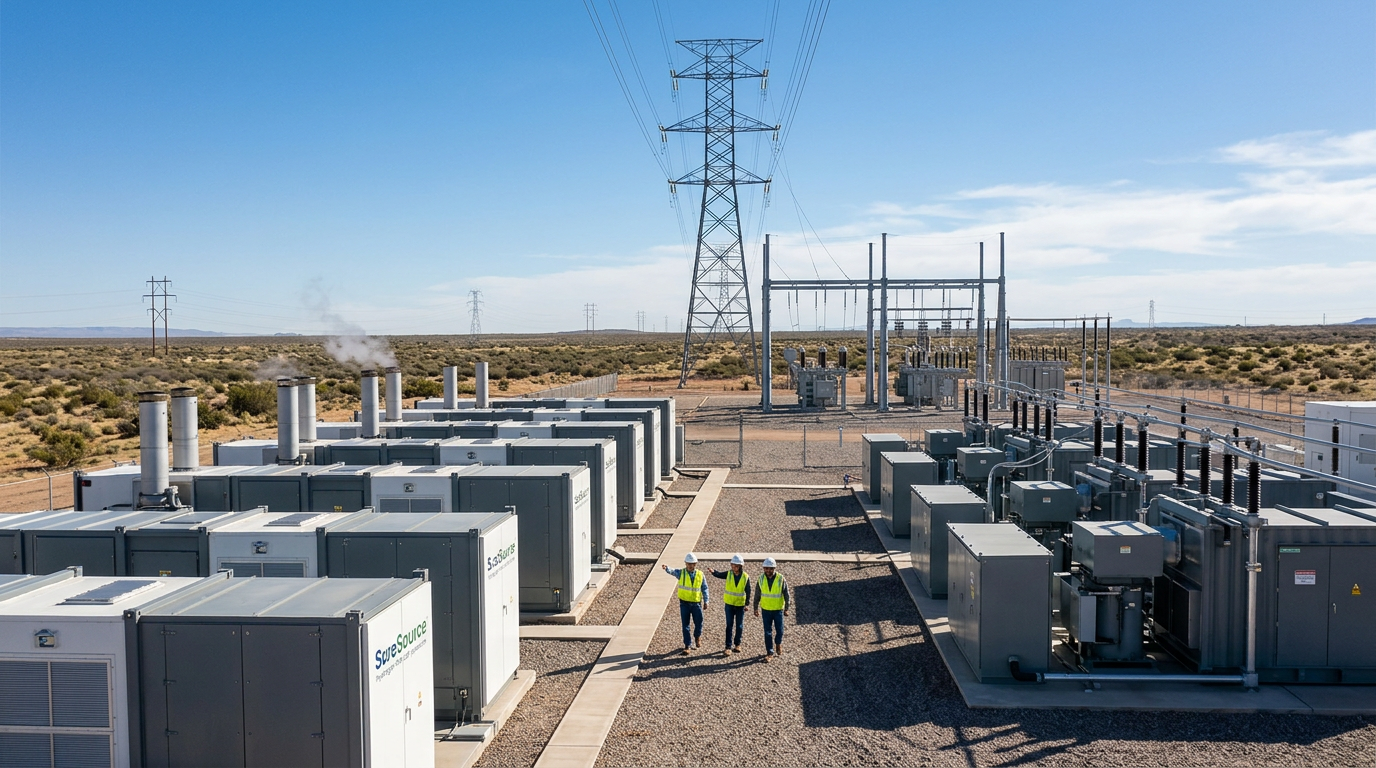
FuelCell Energy designs, manufactures, and operates megawatt-scale fuel cell systems. The core product is the SureSource carbonate platform, which can run on natural gas or biogas and produce electricity, hydrogen, and usable heat simultaneously. What makes it interesting from an infrastructure angle is the distributed nature of the technology. These aren’t massive utility projects requiring years of permitting. Many installations function as microgrids, capable of operating independently when the main grid goes down.
The hydrogen angle is real, not theoretical. A standard SureSource Hydrogen system generates roughly 2.35 MW of electricity alongside 1.2 tons of hydrogen per day, extracted directly on-site through an internal reforming process. That localized production model is what separates this from a pure-play power company.
Slight tangent worth noting: FCEL has been deploying plants globally for over 55 years, with nearly 200 installations worldwide. That’s not the profile of an early-stage concept company. The technology works. The question has always been whether the economics work at scale.
Apple just told us where the next decade of tech is headed
Apple’s appointment of a hardware engineer to CEO signals that the next wave of innovation will be built around devices. Immersed is already ahead of that trend with software and hardware designed to improve productivity. More than 1.5M professionals already use Immersed, with many spending up to 60 hours per week on the platform. Shares now available at $0.79 through a Reg A+ offering.
See Why 8,000+ Investors Bought In
Disclosure: This is a paid advertisement for Immersed Regulation A+ offering. Please read the offering circular at invest.immersed.com
The Numbers Going Into Monday
Here’s where it gets interesting. Full fiscal year 2025 revenue came in at $158.2 million, a 41% increase over the prior year’s $112.1 million. Q1 fiscal 2026 then delivered $30.5 million in revenue, up 61% year-over-year. That’s a strong top-line trajectory on paper.
The complication: gross margins are still negative, and the Q1 revenue spike was driven partly by one-time project completions rather than new contracted AI or data center relationships. That’s a meaningful distinction. Sporadic project revenue doesn’t build the kind of recurring visibility that justifies a long-term premium.
- Q2 FY2026 analyst consensus: revenue of $40.51 million, EPS loss of $0.43 per share
- Backlog: approximately $1.17 billion, though it has declined year-over-year
- FCEL has beaten EPS estimates in roughly 88% of quarters over the past two years
- Stock is up over 190% year-to-date as of early June 2026
- Market cap sits near $1.13 billion at a price-to-sales multiple of about 3.7x
The backlog decline is the part most people are glossing over. Product backlog has shrunk notably year-over-year, and much of the remaining $1.17 billion is tied to long-duration, lower-margin contracts. New data center order conversions aren’t in the backlog yet, because FCEL only counts finalized deals. The pipeline is heavy on proposals.
The Data Center Pivot
In March 2026, FCEL made a move worth watching closely. The company introduced a standardized 12.5 MW power block, purpose-built for data center deployments. The product is assembled from ten 1.25 MW modules with integrated absorption cooling to handle the thermal load of high-density AI compute environments. The pitch to data center operators is straightforward: grid congestion, interconnection backlogs, and permitting delays are slowing construction. FCEL offers a faster path to on-site power without waiting on utility infrastructure.
By early 2026, more than 80% of FCEL’s commercial pipeline was tied to data centers. Management has flagged proposal conversions as the critical variable over the next several quarters. If those deals move from proposal to signed contract, backlog recovers and the revenue visibility picture changes materially. If they don’t, the gap between the stock’s valuation and the underlying fundamentals becomes harder to hold.
There’s also a Rotterdam carbon capture pilot expected to begin demonstration in fiscal 2026, testing a system that produces power and hydrogen while capturing carbon. That’s a longer-duration lever, but it adds dimension to the technology story.
Risks Worth Being Honest About
This is not a clean story. FCEL has not reached profitability, adjusted EBITDA remains negative, and the company has been sustaining its cash runway through financing activity rather than operations. A $200 million at-the-market equity program creates ongoing dilution risk. Analyst sentiment ranges from Hold to Sell, with no current Buy ratings in the consensus.
Data center infrastructure deals are also structurally slow. Procurement and construction timelines for large-scale behind-the-meter generation can run three to five years. Even in a strong demand environment, that creates timing risk, especially when FCEL has not issued fiscal 2026 revenue or earnings guidance.
The bull case and the bear case are both intact simultaneously. That’s what makes Monday’s report worth watching.
The SpaceX filing is public. The window is closing.
June 12 is now confirmed. $75 billion. Ticker SPCX. The largest IPO in history.
You will not get shares. The 21-bank syndicate already locked them up.
But the S-1 just exposed the one company Musk cannot operate without.
It’s publicly traded. It’s still cheap. And in 22 days, the whole world will know its name.
Dylan Jovine is giving it away – free – before the window closes.
What the Macro Says
Power-constrained infrastructure is not a short-term theme. AI data centers require reliable, continuous electricity, and the grid was not built for this level of demand concentration. Companies that can deliver dispatchable, on-site generation near the point of use are increasingly relevant, regardless of the fuel source debate. Investment Tax Credit certainty and the 45Q carbon capture incentive also provide longer-term policy support for FCEL’s core applications.
Revenue is growing. The pipeline is pointed at a real problem. The technology is proven over decades of deployment. What’s unresolved is whether the company can convert pipeline momentum into contracted, scalable revenue fast enough to justify where the stock is trading today.
Monday morning will be a data point. Not a verdict.
The Rising Star Stocks Team
 Rising Star Stocks