July 1, 2026
Vertiv Is Up Big in 2026. The AI Cooling Trade Has More Room.
Featured: Vertiv Is Up Big in 2026. The AI Cooling Trade Has More Room.
Editor’s Note: Jeff Brown and Marc Chaikin, two investment legends who picked Nvidia 10 years ago, are predicting that by the end of this month, Elon Musk’s new AI breakthrough will collide with a strange market pattern with a flawless 100% track record of massive market gains. Read more below because the last time this happened everyday folks had a chance to turn $10,000 into as much as $350,000 in just about 12 months.
Dear Reader,
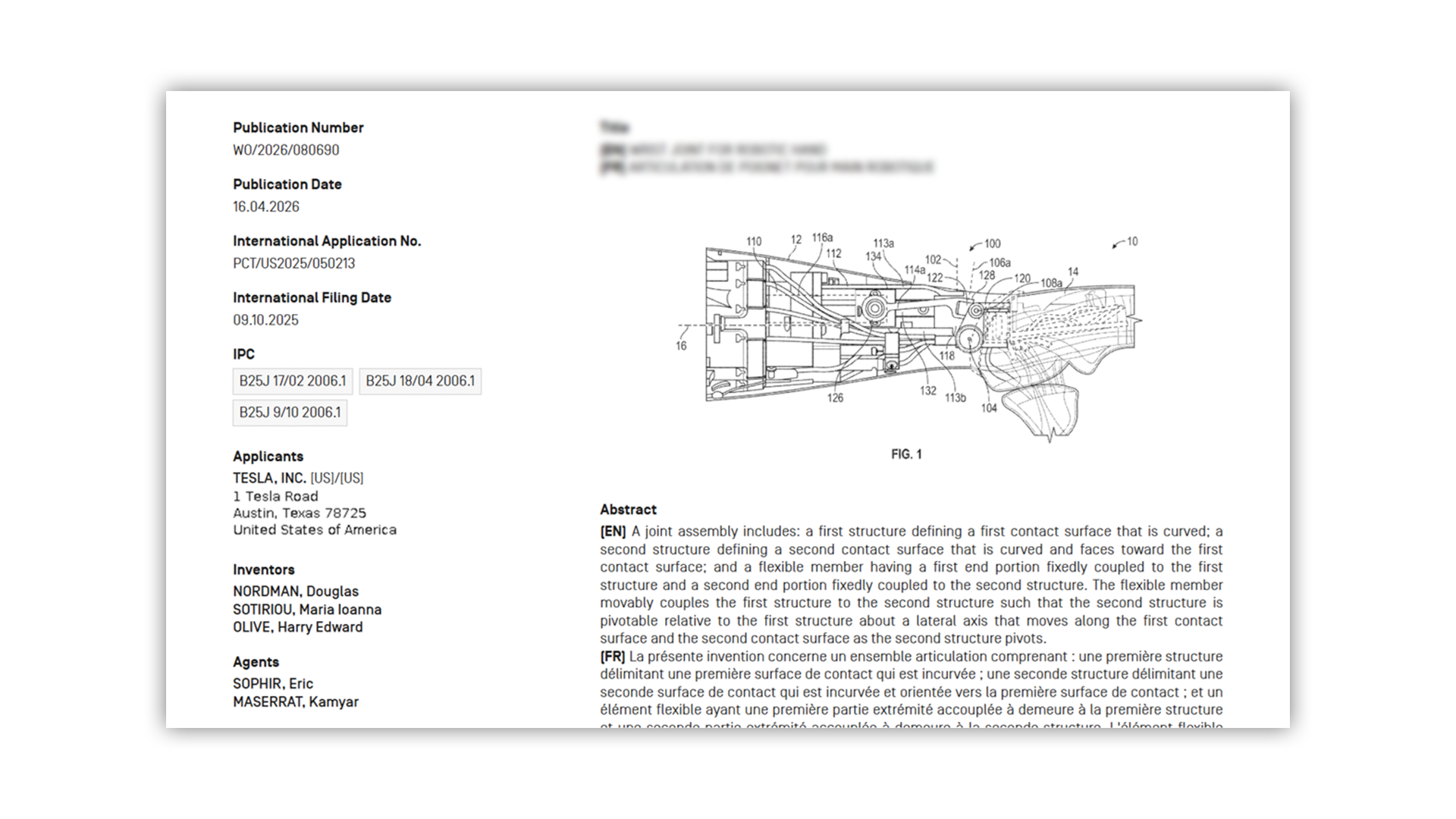
Take a look at Elon Musk’s new patent below…
Because it protects a new invention that could rewrite the future of wealth forever.
I’m talking about a radical new form of AI I call “M.A.G.I.”
One so revolutionary that Elon called it an “infinite money glitch.”
Click here to see the details because he believes this is a once-in-a-generation opportunity to create wealth on a scale most people can’t even comprehend.
What’s the upside potential here?
I know this is going to sound crazy…
But Elon is projecting growth of over 7,000,000%.
Let that sink in.
That’s enough to turn $100 into more than $7 million.
This sounds absolutely insane.
But then again… everything Elon has ever done sounded insane at first.
Self-driving cars.
Reusable rockets that land themselves.
Brain chips that let paralyzed people control computers with their minds.
Crazy ideas.
But he turned them into trillion-dollar realities.
So here’s the real question…
Will you watch Elon build another empire from the sidelines…
Or will you finally position yourself to potentially become one of the winners in his next trillion-dollar revolution?
We have so much to look forward to,
Jeff Brown
Founder & CEO, Brownstone Research
FEATURED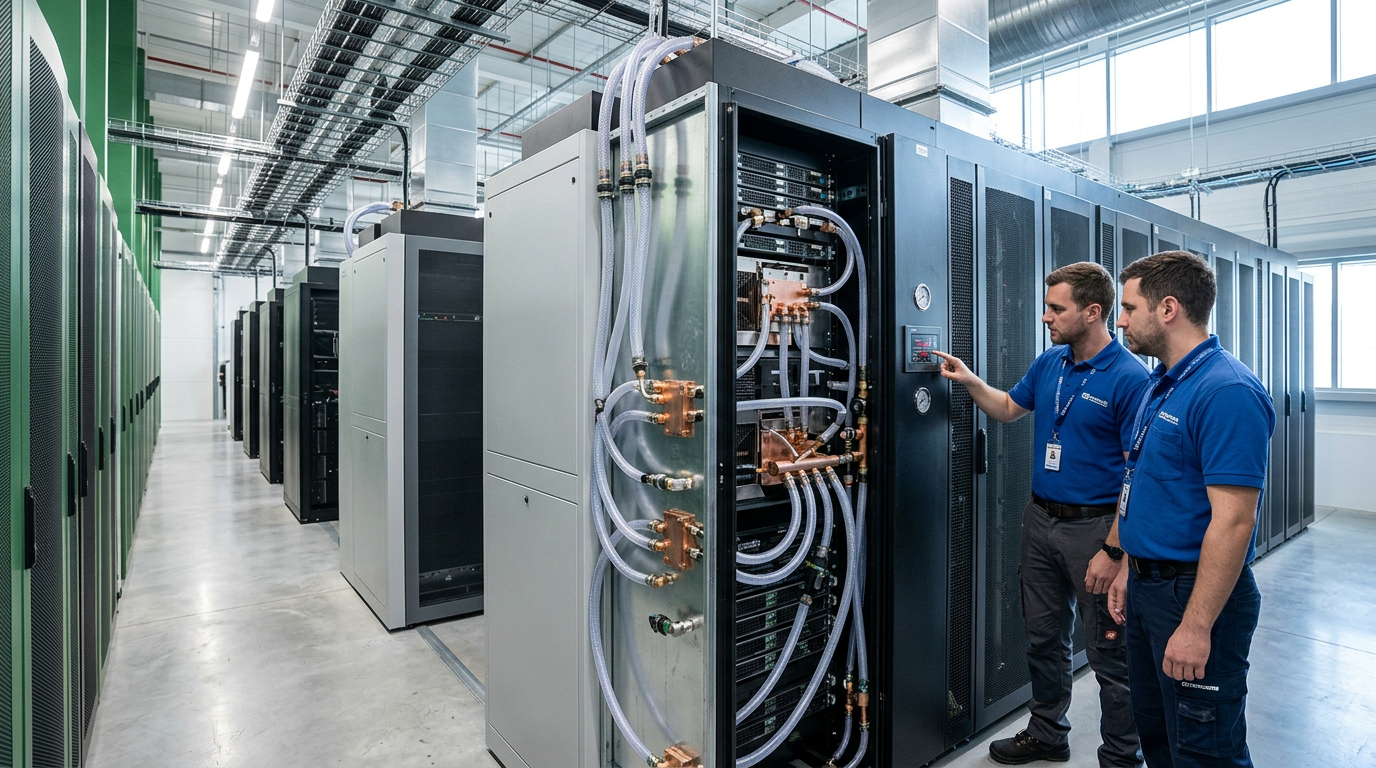
Vertiv Is Up Big in 2026. The AI Cooling Trade Has More Room.
Most people watching the AI trade are still focused on chips. That makes sense. Chips are the obvious place to look.
But there is a less obvious question that every hyperscaler is quietly losing sleep over: how do you keep those chips from melting?
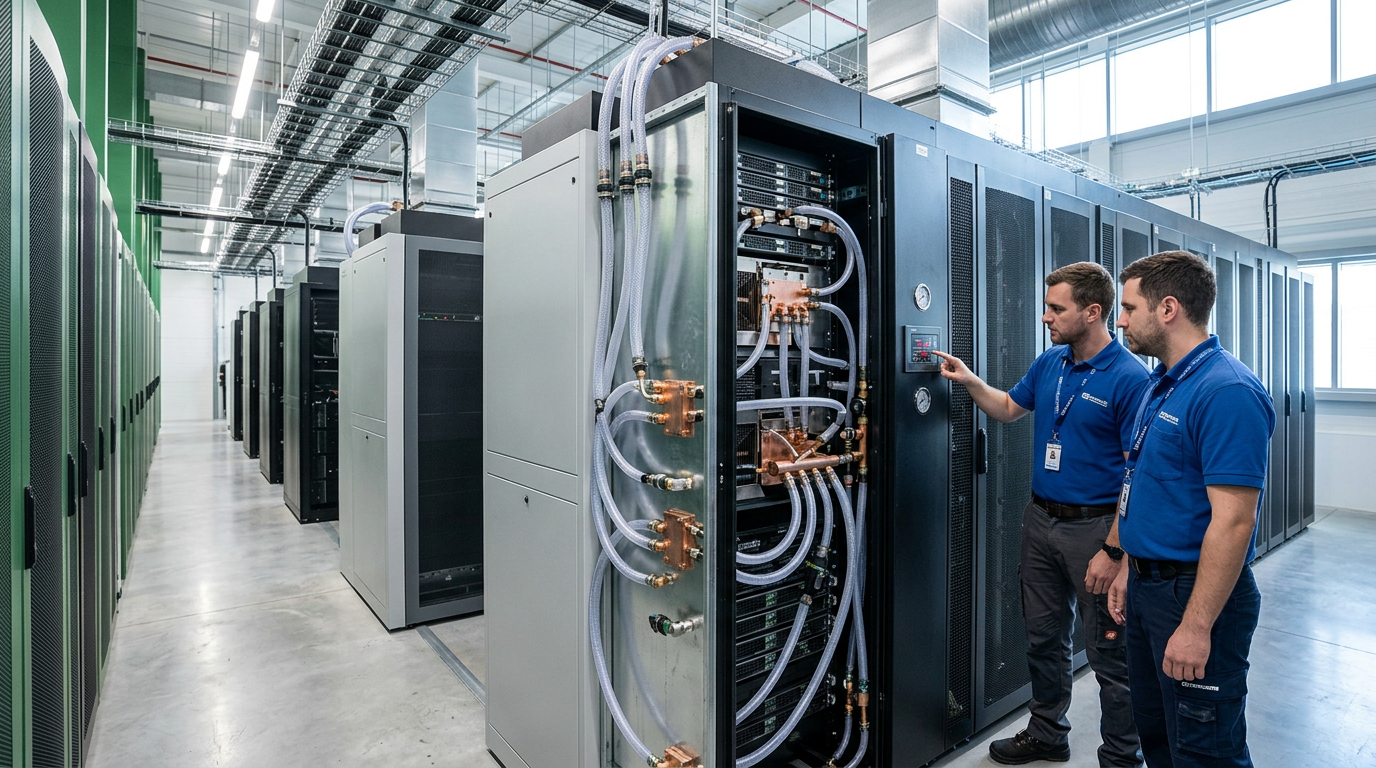
That is not rhetorical. AI training clusters today push 120 to 150 kilowatts per rack. A few years ago, enterprise servers drew somewhere between 10 and 15 kilowatts. Traditional air cooling cannot remove heat at that density fast enough. Liquid cooling has moved from niche to necessary, and one company sits at the center of that shift in a way that is still not fully appreciated by most investors.
That company is Vertiv Holdings.
The stock has climbed more than 73% from its January 2026 open to its mid-May all-time high near $380. It has outpaced the Magnificent Seven, the S&P 500, and the Nasdaq-100 by a wide margin this year. And yet the underlying business story still feels underfollowed relative to the scale of what is actually happening here.
What the Numbers Actually Say
Q1 2026 results, reported April 22, were not subtle. Revenue hit $2.65 billion, up 30% year-over-year, ahead of estimates. Adjusted diluted EPS grew 83%. Diluted EPS grew 136%. Adjusted operating margin came in at 20.8%, expanding 430 basis points from Q1 2025.
Earnings growth significantly outpaced revenue growth. That is the margin leverage playing out in real time.
The backlog now stands above $15 billion. CEO Giordano Albertazzi has said that figure provides revenue visibility well into 2027. For context, that backlog represents roughly 12 to 18 months of forward revenue at current run rates. It is not a soft indicator. It is contracted demand that has already been won.
A 64% Dividend from Gold?
One little-known fund tied to gold is quietly delivering 64% Yields – paid monthly. And almost no one is talking about it.
Click here to discover the secret gold income fund before the next payout.
Following those results, management raised full-year 2026 guidance to net sales of $13.5 billion to $14.0 billion, with organic sales growth of 29% to 31%. Adjusted diluted EPS guidance was set at $6.30 to $6.40, implying approximately 51% earnings growth at the midpoint versus 2025. Free cash flow in Q1 2026 came in 147% higher than the prior year period.
On the analyst side, TD Cowen lifted its price target to $387 after Q1 results. Bernstein initiated coverage with an Outperform rating and a $416 target, calling Vertiv “arguably the only pure-play with scale” in the data center power and cooling market. Management has also outlined an M&A pipeline of $750 million to $1 billion focused on AI infrastructure. In June 2026, Vertiv completed its acquisition of ThermoKey, an Italian manufacturer of heat rejection systems, directly expanding its liquid cooling capabilities across North America and EMEA. The company also acquired Strategic Thermal Labs, further strengthening its thermal management position.
Why Liquid Cooling Is a Structural Shift
Here is where it gets interesting for anyone thinking about duration.
Liquid cooling is not a trend that peaks and reverses. It is a physical constraint. NVIDIA’s reference architectures for its Blackwell and Rubin GPU generations both specify liquid cooling as the required thermal solution. Every new hyperscaler facility opening in 2027 or later is being designed around it from the ground up. Retrofitting older air-cooled facilities is expensive and often impractical.
Slight tangent, but it matters: Vertiv is also co-developing an 800-volt DC power architecture aligned with NVIDIA’s Rubin Ultra platform, and it launched a production-grade digital twin for AI factories integrated with NVIDIA Omniverse DSX. That is not a vendor relationship. That is a co-engineering partnership at the product design level.
Vertiv is one of a very small number of suppliers with the scale and certifications to bid for hyperscaler liquid cooling projects today. That short list is the moat. Switching costs once a data center design is locked around a specific thermal system are substantial. Hyperscalers are not going to redesign their infrastructure mid-build because a competitor offered a slightly better spec sheet.
Roughly 75% of Vertiv’s revenue comes from data center customers. The Americas segment, which led organic sales growth of 44% in Q1 2026, is the largest at approximately 60% of total sales. The company is not tilting toward AI. It already is the AI physical infrastructure story.
The Risk Side
This is a name that carries real valuation risk, and it would be irresponsible not to name it plainly.
At a forward NTM P/E near 48x, Vertiv is priced for continued execution. Any meaningful guidance miss would compress that multiple fast. The company’s 5-year beta is 2.04, meaning it moves sharply in both directions when investor sentiment shifts. If AI capital spending expectations cool, or if a major hyperscaler announces plans to develop in-house thermal solutions, VRT shares would feel that pressure well before any revenue impact showed up in the financials.
Customer concentration is also worth flagging. A significant portion of Vertiv’s growth is tied to the capital spending plans of a relatively small group of hyperscale cloud companies. If those plans pause, even briefly, the order book would reflect it quickly.
The upcoming Q2 2026 earnings report is confirmed for August 5, 2026. Consensus adjusted EPS sits near $1.40. Watch the order book update and any revision to full-year guidance. Those two numbers will tell you more about VRT’s trajectory than the quarterly revenue figure will.
The Bigger Picture
There is a useful framework for thinking about AI infrastructure that divides the market into three layers: the intelligence layer (chips and models), the software layer (applications and platforms), and the physical layer (power, cooling, and connectivity). Most of the investment attention has been concentrated in the first two.
The physical layer is catching up. Data center liquid cooling market projections suggest the global market could grow from roughly $5.7 billion in 2026 to $29.2 billion by 2033. That trajectory does not require AI spending to stay at current levels. It just requires AI infrastructure to keep getting denser and hotter, which physics practically guarantees.
Mag 7’s relentless assault on Nvidia’s future
Nvidia’s biggest customers are now buying and selling chips to each other. That means, the virtual monopoly that fueled NVDA’s $4 trillion market cap is OVER. If you currently own NVDA, here’s a better alternative. Their competition is scarce, which puts them in a hugely advantageous spot. This supplier’s stock has outperformed Nvidia’s by 50X since July.
Click to get the full details on this urgent “Nvidia alternative” right here.
Vertiv’s 2026 revenue guidance of $13.5 billion to $14 billion is not a ceiling. It is a floor for what the company is already delivering against contracted demand. The backlog extending into 2027 is real work, from real customers, committed on paper.
Whether the stock has room from here is a function of execution. The business has not given investors a reason to doubt it yet.
August 5 earnings are the next chapter.
 Rising Star Stocks