|
The U.S.-China AI rivalry is almost always framed as a race for compute. Who has the most advanced chips. Who controls the most GPU clusters. Who can pour the most capital into frontier model training. Washington has spent years pulling levers on that exact dimension, restricting exports, blocking chip sales, and pressuring allies to limit China’s access to Nvidia hardware.
That framing misses the fight that China has already won.
The Open-Source Inversion
In the spring of 2026, Hugging Face published its annual platform data. The number that landed hardest: Chinese open-source models now account for 41% of global downloads on the platform, surpassing U.S. models for the first time. Hugging Face CEO Clément Delangue did not bury the finding. He told CNBC’s Squawk on the Street that China is “clearly dominating on open models right now” and that he would not be surprised if Chinese labs start dominating at the frontier as well, by year-end or in 2027.
That is not a marginal shift. Hugging Face hosts millions of public models, and the repository count has been growing fast. When the download rankings flip at that scale, something structural is moving.
On the AI routing platform OpenRouter, recent usage rankings have been heavily populated by Chinese-origin models, including Tencent, Xiaomi, DeepSeek, MiniMax, and Zhipu AI. The U.S. congressional advisory body the U.S.-China Economic and Security Review Commission flagged the dynamic bluntly in March 2026, warning that China’s open-source approach can create a self-reinforcing competitive advantage, allowing it to challenge U.S. rivals despite restricted access to advanced chips.
The mechanism is not complicated. Beijing has deployed AI throughout manufacturing, logistics, and robotics at scale. That real-world deployment generates proprietary data. That data feeds back into model improvement. Broader adoption produces better models, which produces broader adoption. Export controls can slow chip access. They cannot slow this loop.
Alibaba Is Where the Trade Lives
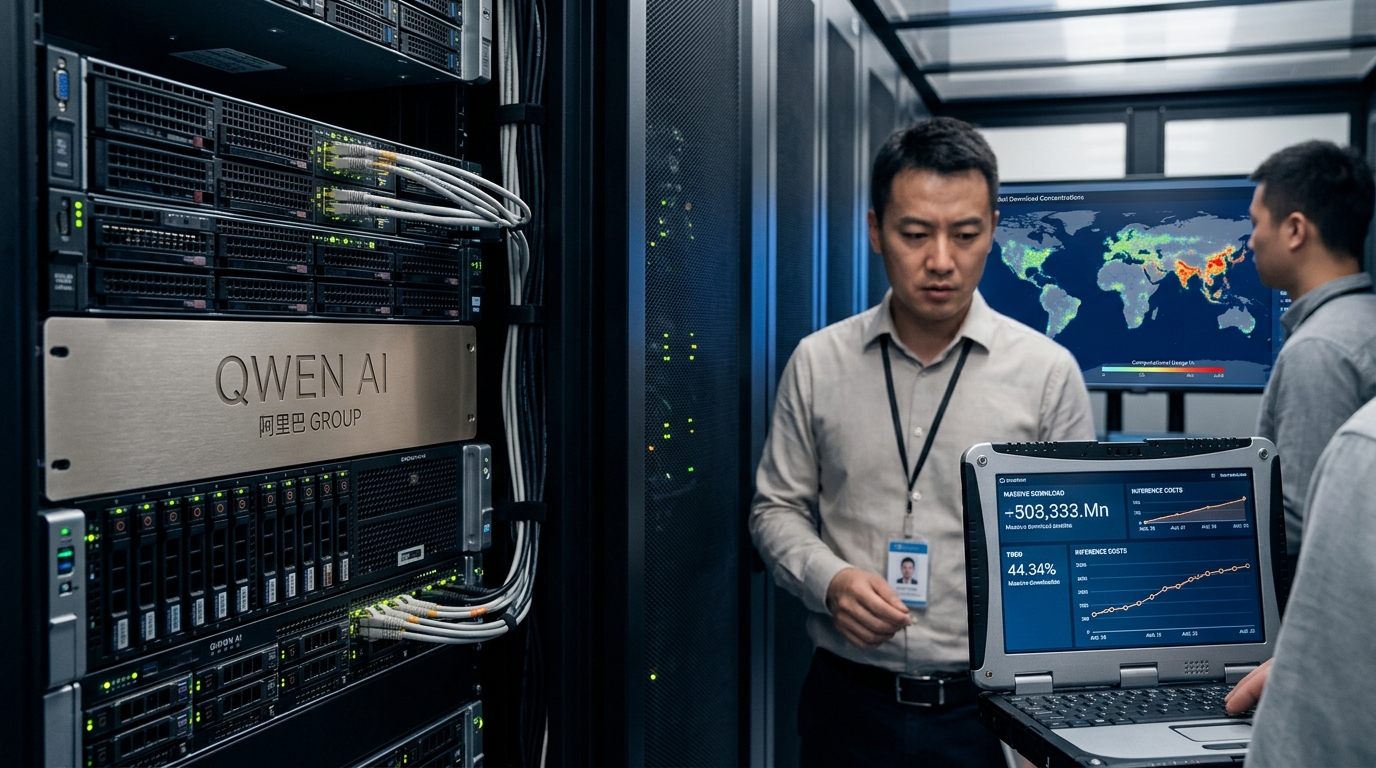
Within the Chinese AI ecosystem, one company is positioned across every layer that matters: model, cloud, and now consumer device. That company is Alibaba Group Holding (NYSE: BABA), and it reports earnings on August 28.
|
 Rising Star Stocks