
Dear Reader,
Today, thanks to Irish law, 35 million Americans may already be eligible for their own Irish passport…
…you could be one of them…
You could even get an Irish passport mailed to your home right there in the U.S….no trips to Ireland needed…
Just simply start online today.
Yes, it’s possible.
Read this exclusive presentation to learn more…
It’s all inside the bonus chapter in the latest edition of our best-selling book:
European Living: The Complete Manual for Americans Over 55
Click here to learn how to grab your free book now.
Sincerely,

Jennifer Stevens
Executive Editor, International Living
P.S. Many Americans have already got their own Irish passport this year… you maybe next.
The Bacteria That Could Replace Plastic Has a Price Problem
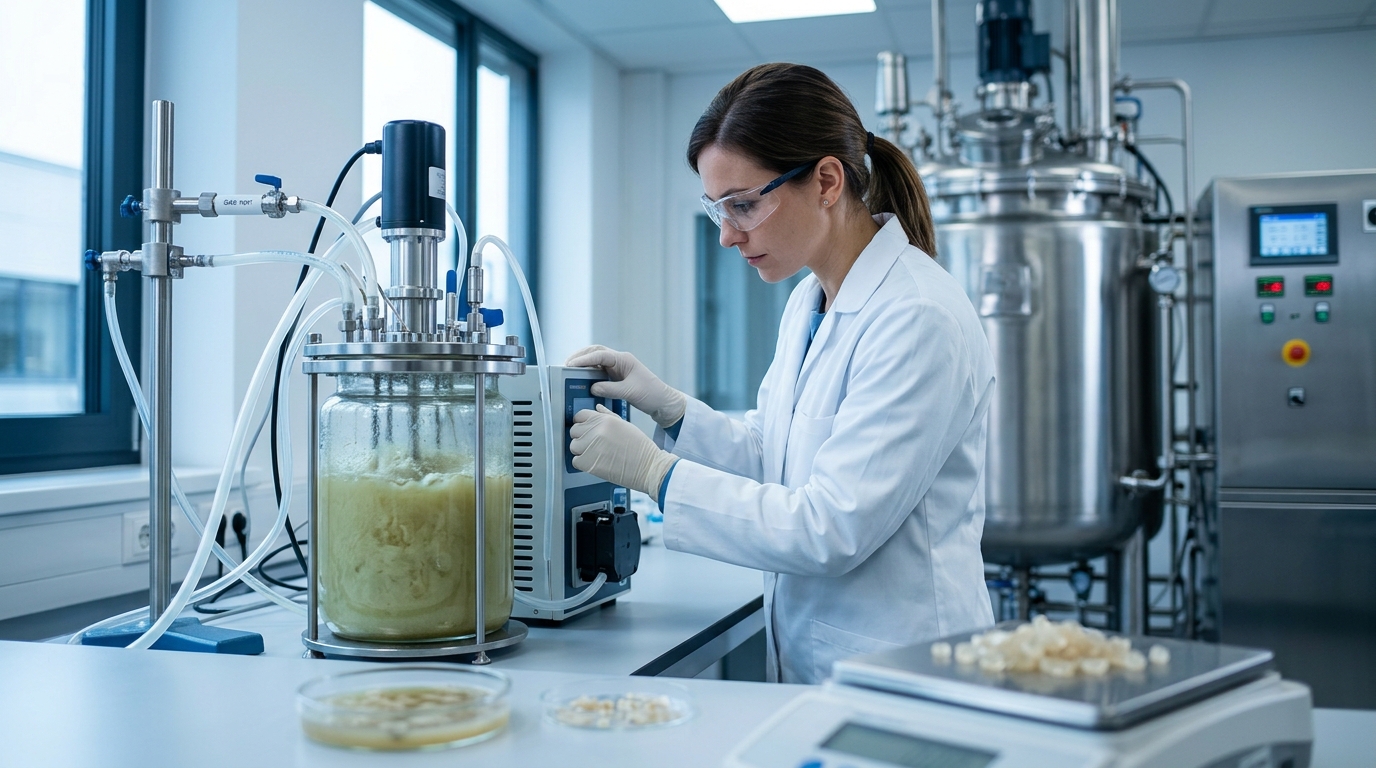
The pitch sounds almost too clean: feed waste methane to bacteria, and the bacteria excrete biodegradable plastic. No petroleum. No net carbon. The packaging can biodegrade in soil and some aquatic environments, but the rate depends on conditions and product thickness. Consumer goods brands get a material that can perform like polypropylene and, in some cases, can be paired with lifecycle accounting that is meaningfully lower-carbon than fossil plastics.
That pitch is real. The bottleneck is not biology. It is economics.
What the Science Has Actually Achieved
The microbes in question are methanotrophs, bacteria that consume methane as both a carbon source and an energy supply. Certain Type II strains, including Methylocystis, store carbon as polyhydroxyalkanoates (PHAs) inside their cells. Under controlled fermentation conditions, PHA can exceed half of total cell dry mass. Researchers have reported productivity of 11.90 mg of PHA per liter per hour in a Type II Methylocystis system, a figure that matters specifically because low methane solubility in water has historically strangled industrial output.
The resulting plastic can match commercial-quality specs, but the thermals vary by exact polymer, copolymer mix, and molecular weight. Reported melting temperatures for PHB and related PHA grades commonly fall in the mid-170s to the high-180s °C range, with some reports reaching higher under specific conditions. Processing behavior can be close enough to polypropylene that manufacturers may run it through existing injection-molding equipment without a full retool. That last detail is not incidental. It removes the infrastructure excuse.
Where Mango Materials Stands Right Now
Mango Materials is the clearest window into what commercial-scale methane-to-PHA actually looks like in 2026. The California company co-locates its bioreactors with wastewater treatment plants, using waste biogas as its feedstock. It has a field site in Vacaville and uses a 5,000-liter bioreactor for strain and process testing. It has also described brand-partner work that includes products connected to Allbirds, and third-party profiles have cited a Natura-branded soap dish made with its PHA material.
On September 10, 2026, the company announced a partnership with UC Davis to engineer methanotroph strains that can make polymer recovery more efficient, with support from the National Science Foundation and BioMADE. That last piece is the industry’s acknowledged weak point. Recovering and purifying PHA from the cells remains expensive, and it is where a large share of production cost can live. Separately, the Department of Energy announced a $117 million industrial innovation funding package on September 1, 2026, though that announcement was broad industrial scope rather than a methane-to-bioplastics-specific earmark.
Mango’s own techno-economic modeling identifies 1.5 million kilograms per year as the smallest plant size at which fixed costs dilute enough to approach viability. The company is not there yet.
The Number That Holds Everything Back
PHA pricing is still volatile by region and grade. Market trackers in 2026 have published figures that put PHA at roughly the mid-single-digit dollars per kilogram in some markets, with U.S. indications higher than $6 per kilogram in some periods. Conventional petroleum-based plastic can still come in materially cheaper at scale. That gap is why consumer packaging giants are watching rather than converting.
It is narrowing. More capable fermentation and downstream processing can reduce energy and separation loads, and larger facilities can shift the cost curve further. When EPR fees and packaging taxes are factored in, the effective premium for brand owners can shrink for certain formats, especially where non-recyclable plastics face higher per-kilogram fees.
Methane-sourced PHA is not at that compression point yet. But the regulatory floor under conventional plastic is rising, and the extraction cost of PHA is falling. The question for packaging investors is when those two lines cross, not whether they will.
What to Watch
The UC Davis collaboration may be the most important near-term signal. Its explicit goal is genetically modifying methanotrophs for higher PHA yield and easier polymer recovery, with Mango evaluating the engineered strains through its 5,000-liter system. If the strains validate at that scale and the unit economics shift by even 20%, Mango’s path to 1.5 million kilograms per year becomes a financing question rather than a technology question. That is the inflection worth tracking.
 Rising Star Stocks