
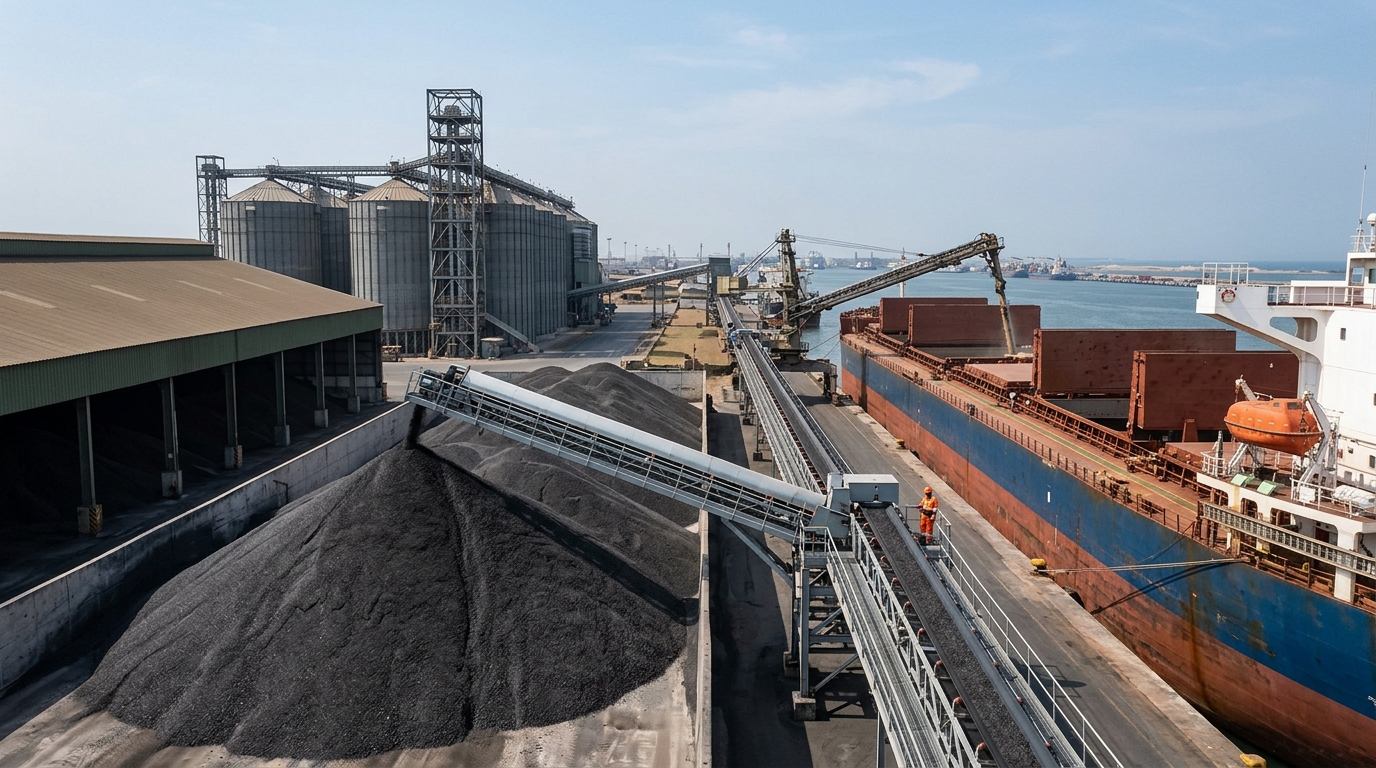
The grain market’s supply architecture shifted again on August 24. India’s Directorate General of Foreign Trade issued two notifications lifting the country’s export ban on wheat and wheat products with immediate effect, reclassifying them from prohibited to free. India is coming off a record wheat crop of about 120 million metric tons, and the country’s food secretary said allowing exports would support domestic prices, boost farmer incomes, and encourage stronger sowing ahead. India just added a very large supply source to a market that badly needs one.
It needs one because the Black Sea is effectively closed. Attacks on shipping have shut down more than 90% of Russia’s grain export capacity in the Azov and Black Sea basin, cutting off a major source of low-cost supplies and driving up global prices. SovEcon head Andrey Sizov has described the Russian Black Sea and Azov grain-export system as effectively shut, with roughly 250,000 tons a month of residual capacity at Tuapse standing in for a region that previously loaded millions of tons. On the Ukrainian side, Ukrainian officials say that since the beginning of August, no vessels have entered Odesa ports, forcing Ukraine to use alternative routes, with export volumes for the month falling to just 590,000 tons, only 30% of what was expected to ship.
Russia’s numbers are equally stark. Agricultural consultancy SovEcon projects Russia will export between 3.0 and 3.4 million metric tons of wheat this month, well below the five-year August average of 5 million tons and potentially the lowest August total since the 2016-17 agricultural season. The bottleneck is logistical, not agronomic. Grain exists. Moving it does not.
That creates a routing opportunity for U.S. agribusiness, but the more actionable trade for today sits on the input side. The fertilizer market is running its own parallel supply shock, and the technical momentum in CF Industries (CF), Nutrien (NTR), and Mosaic (MOS) has been building for weeks.
The catalyst is China’s phosphate export restrictions. DAP reached $795 per ton as of the week ending August 17, up 3.58% on the month, as fresh Chinese phosphate export curbs began tightening global supply, with restrictions covering an estimated 50 to 80% of China’s export volumes and pushing import-dependent buyers toward costlier alternatives.
Beijing first imposed fertilizer export curbs in mid-March 2026 to protect domestic supply after the Strait of Hormuz crisis disrupted global trade.
Fertilizer inputs such as urea, ammonia, and sulfur are produced all over the Persian Gulf, and roughly one-third of global fertilizer trade transits through the Strait of Hormuz. This has created a massive tailwind for domestic fertilizer producers, who can now capture significant margin gains thanks to the supply cutoff.
CF Industries is the highest-conviction name in that context. CF makes nitrogen primarily using low-cost U.S. natural gas as its feedstock, making the company one of the lowest-cost nitrogen producers globally. First-half adjusted EBITDA reached about $2.18 billion, with the company also announcing a 20% dividend increase. CF’s 52-week range of $75 to $142 reflects how violently this supply dislocation has repriced the stock.
Nutrien occupies the second tier. NTR missed Q2 EPS at $2.61 versus $2.89 estimated, but the shortfall was nitrogen-specific: potash adjusted EBITDA rose 15% to $1.24 billion in the first half of 2026, supported by higher benchmarks and stronger execution. Potash is structurally firm and that is where Nutrien’s earnings growth is coming from.
Mosaic is the most complicated of the three. MOS has one of the riskier profiles in the industry due to sulfur exposure, a primary input to sulfuric acid used in phosphate fertilizer production, which has been under stress during the Hormuz disruption. DAP at $795 is favorable for its revenue line, but the input cost drag from sulfur is a real constraint on margin capture.
The risk on the fertilizer side is an India-driven wheat demand reset. If India’s export reopening proves substantial and global wheat prices soften, it reduces the urgency of large-acreage replanting cycles that drive fertilizer demand. Watch whether buyers in Egypt, Indonesia, and Algeria shift toward Indian wheat in coming weeks. That pivot, if it accelerates, could ease some of the food security pressure currently supporting elevated fertilizer demand.
For now, the cleaner trades are CF for nitrogen leverage and NTR for potash exposure with a margin of safety. The phosphate restriction from China is the unresolved variable that keeps DAP elevated and keeps MOS worth monitoring on any technical pullback toward support.
 Rising Star Stocks