
Six months into the Iran war, Brown University’s Watson School has put a precise number on what the conflict is costing families at the gas station. $100.9 billion. That works out to roughly $770 per U.S. household in extra gasoline and diesel spending since fighting began on February 28, and the tracker says the total is rising by about $1 million every two minutes.
Axios and Yahoo Finance both reported this week, citing Brown’s Iran War Energy Cost Tracker, that U.S. consumers have paid about $100.9 billion more for gasoline and diesel since the war began, roughly $770 per household so far.
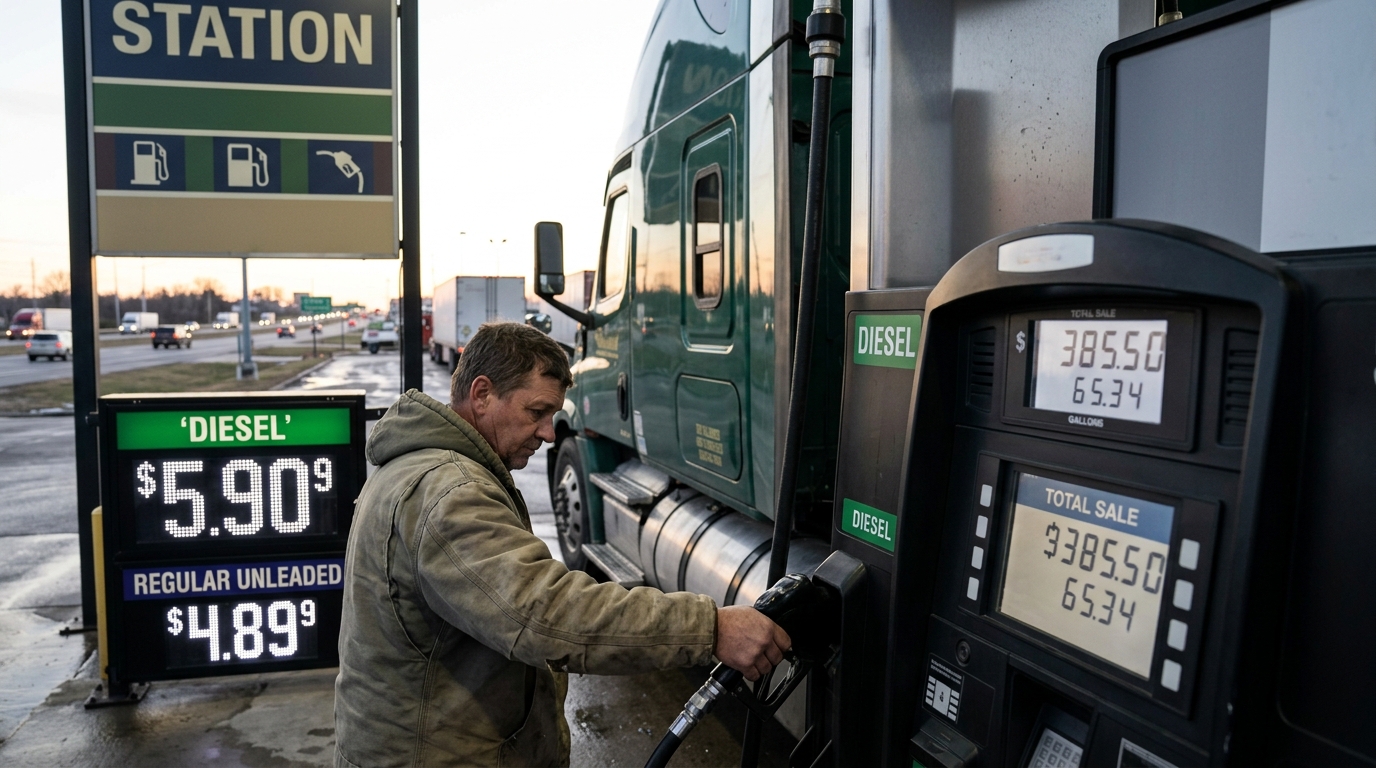
The diesel side of that bill is the one investors need to watch most carefully. Diesel set a new record on Friday, September 4, when AAA’s national average hit about $5.85 per gallon, surpassing the prior record set in 2022. By Monday, September 7, the AAA average was around $5.90 a gallon, up roughly 59% from a year earlier, according to the Associated Press. Tom Kloza, chief energy adviser at Gulf Oil, told CNN this is shaping up to be “the most expensive fall ever for gasoline, but really for diesel,” adding that it will “fuel every aspect of inflation.”
Two forces are squeezing supply simultaneously. The Associated Press and other outlets have pointed to war-driven disruption risk in the Persian Gulf, alongside refinery outages in Russia after Ukrainian drone attacks, as factors tightening the market for diesel and other fuels. Russia’s fuel export restrictions have also been periodic and subject to carve-outs, adding uncertainty to global supply.
Who Loses and Who Gains
The $770 pulled from household budgets has to come from somewhere else. Consumers are already showing where.
In recent earnings coverage, Reuters has highlighted a split inside retail: some large retailers have warned of a more cautious consumer, while off-price and discount chains have pointed to continued deal-seeking. Dollar Tree raised its full-year profit outlook in late August, and Reuters has also reported higher forecasts from TJX and Ross Stores this year, underscoring a shift toward value. Dollar General said same-store sales rose 3.5% year over year in its most recent quarter and raised its full-year same-store sales growth outlook to 2.5%-2.9% from 2.2%-2.7%.
But the trade-down story is not simple. Dollar General’s core appeal is geographical proximity to price-sensitive shoppers, often in rural communities. When money gets tight, a wide swath of its customer base can simply stop spending altogether, because there is no viable trade-down option. At the same time, discount chains have increasingly talked about higher-income shoppers showing up for deals, which may be helping results even as the lowest-income customer pulls back.
Because diesel powers freight and delivery networks, higher prices mean higher transportation costs for a long list of everyday goods. More expensive fuel is increasing bills for businesses across sectors, some of which have already passed costs to consumers in the form of added fees on online orders and packages in the mail.
The Fed Clock Is Running
August CPI is due Friday, September 11, not Thursday. The stakes are still unusually high. In recent market coverage, traders have been watching the inflation report as a near-term catalyst for the September 15-16 FOMC meeting. July headline CPI was running at 3.4% year over year, and the Fed’s current target range for the federal funds rate is 3.75%-4.00%, with energy again a swing factor. A hot energy reading on Friday would harden the case for Chair Kevin Warsh to move.
A rate hike layered on top of a $770 fuel surcharge would further compress the budgets of exactly the consumers retailers are already losing. Walmart has pricing scale and distribution efficiency that discount rivals cannot replicate. Dollar Tree and Dollar General benefit from the trade-down impulse but face a hard ceiling when their core customers simply run out of money to redirect. The XRT retail ETF reflects this divergence: broad retail is under pressure while the value end of the space fights to hold its ground.
What to Watch
Friday’s CPI reading will clarify whether energy costs are bleeding into core categories. If they are, the Fed hike probability rises further, dollar stores face a tougher consumer, and Walmart’s scale advantage becomes even more valuable. If diesel prices stabilize near current levels, the trade-down shift could persist long enough to benefit value retailers through year-end, even with elevated freight costs embedded in shelf prices.
The single most important insight here: a war-driven energy bill does not stay at the gas pump. It travels through every freight lane, every grocery aisle, and eventually into the Fed’s rate decision. Investors who think of $5.90 diesel as someone else’s problem are underestimating how completely it is restructuring consumer behavior, retail results, and monetary policy, all at once.
 Rising Star Stocks