
July 8, 2026
Sunrun Is Moving Again. The Real Story Started Two Weeks Ago.
Featured: Sunrun Is Moving Again. The Real Story Started Two Weeks Ago.
Dear Reader,
Tomorrow morning a small group of investors will get a text message…
From a secure app on their phone.
It could come as early as 9:30 a.m.
The app is a direct link to possibly the world’s most powerful stock rating software.
Every time it sent a message…
The average gain was 310%.
And that includes the times it missed.
The folks on this exclusive list have seen almost 3,000 chances to double their money…
And over 400 chances to 10x their money.
This next message could do the same thing…
But right now…
You won’t receive this text message.
Click here to learn how to sign up for these alerts

Chris Graebe
FEATURED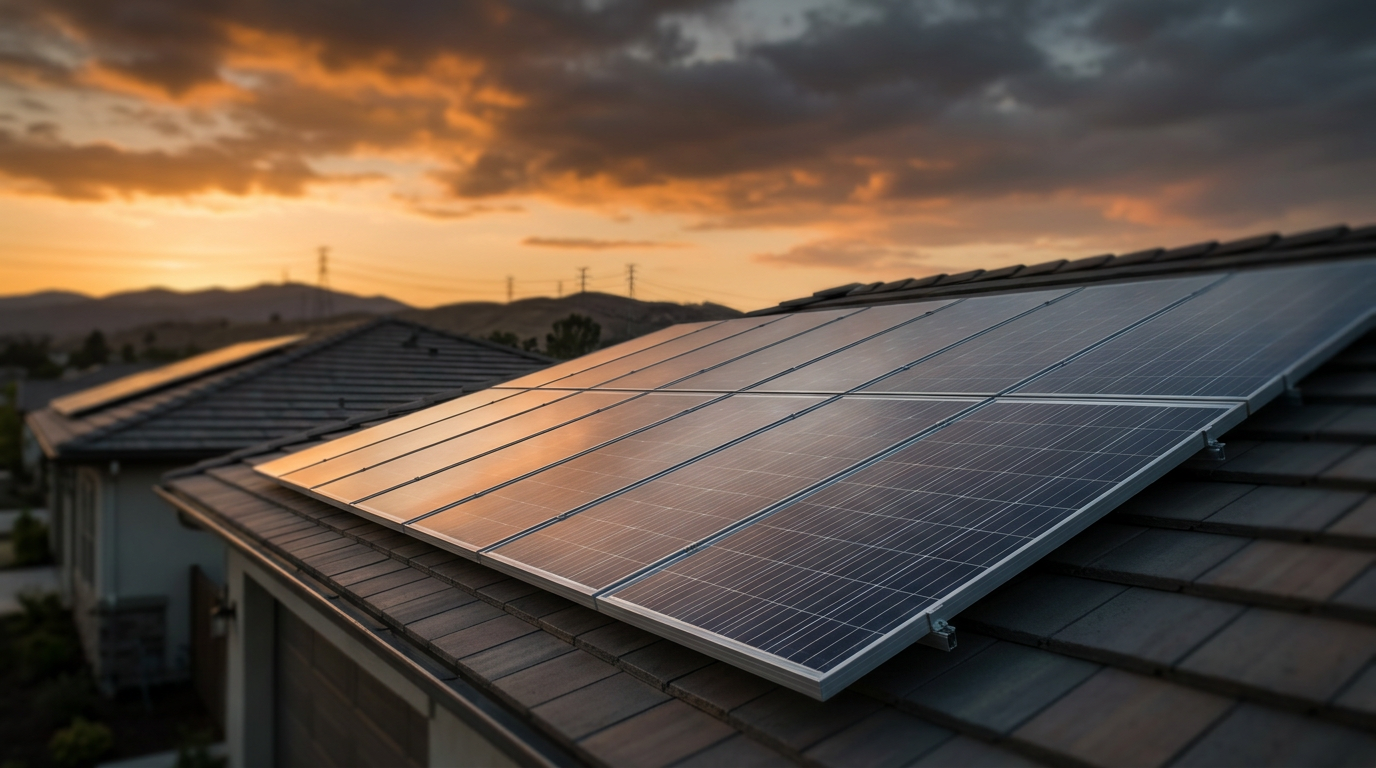
Sunrun Is Moving Again. The Real Story Started Two Weeks Ago.
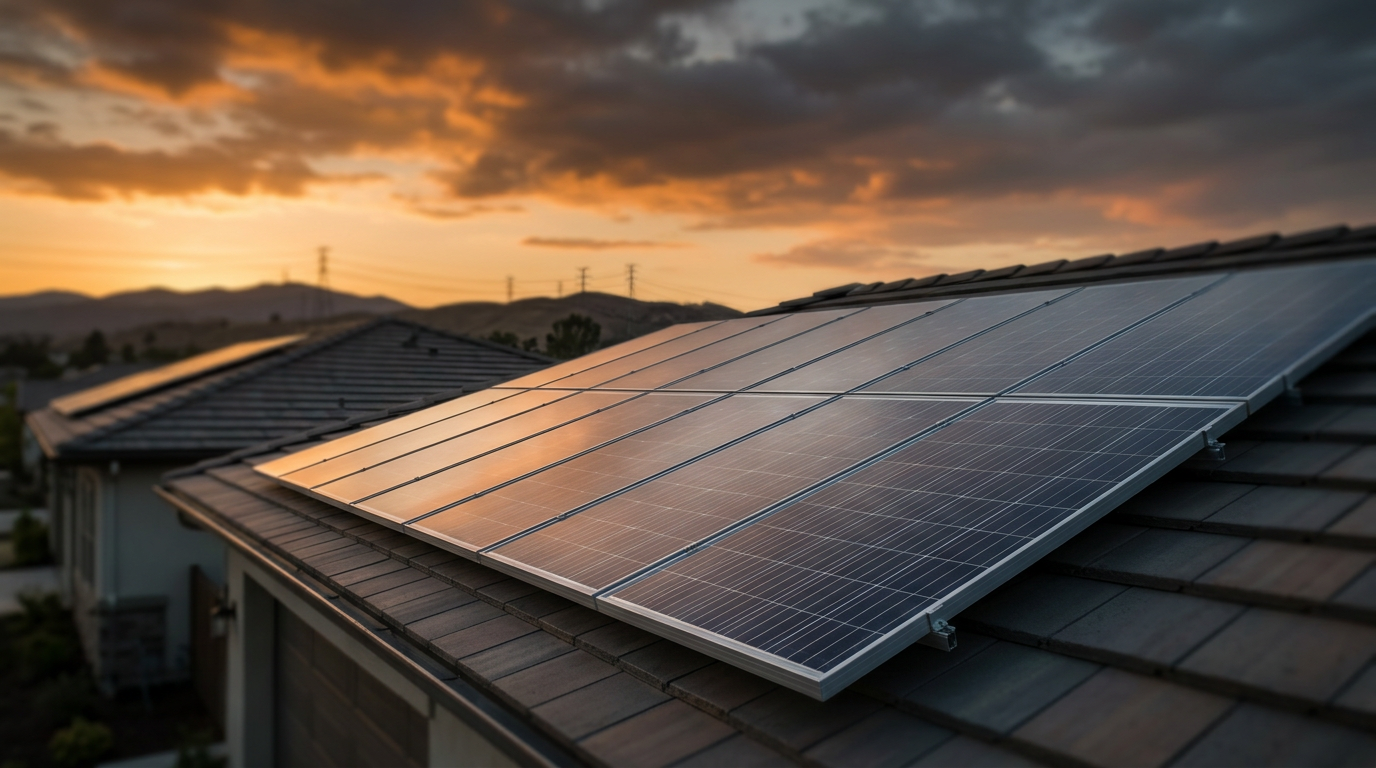
Most people looking at Sunrun today see a solar stock catching a bid on oil-shock headlines. That’s the surface read. What’s actually happening underneath is more interesting than a one-day move.
Here’s where we are. President Trump declared the U.S.-Iran ceasefire “over” this morning at the NATO summit in Ankara, calling the memorandum of understanding “a waste of time” after the U.S. launched fresh strikes and Iran retaliated by attacking commercial vessels in the Strait of Hormuz. West Texas Intermediate crude jumped more than 5% into the low-to-mid $74 range. The broader U.S. equity market pulled back sharply. Airlines, travel, and discretionary names got hit.
And Sunrun moved sharply higher in premarket.
Slight tangent, but it matters: the market today is not a monolith. Tech and semiconductors are under pressure. But a very specific rotation is happening into stocks that benefit when fossil fuel supply looks uncertain. Healthcare, utilities, alternative energy. Money is moving fast, and Sunrun is directly in the path of it.
What makes this move feel different from a simple sector rotation, though, is what the company actually announced two weeks ago.
The 16 GW Deal Nobody Fully Absorbed
On June 24, Sunrun, Tesla, and home-energy platform Renew Home announced a framework agreement to aggregate more than 16 gigawatts of flexible energy capacity from millions of residential batteries and smart thermostats, pointing that capacity directly at AI data centers and hyperscalers.
The structure is a virtual power plant, or VPP: software that coordinates hundreds of thousands of home battery systems and more than 8 million smart thermostats to behave like a single large generator, dispatching power to the grid on demand. No new land. No new transmission lines. No hardware build-out waiting years in an interconnection queue.
More than 300 megawatts of that capacity is already deployable today in Virginia’s data center corridor, scaling to at least 500 megawatts by 2030. The companies have also committed capacity to PJM’s reliability process, which could unlock over a gigawatt immediately if accepted.
The market’s initial reaction was violent. Sunrun jumped roughly 26% on June 24. Volume hit 52.6 million shares, approximately 482% above the three-month average. Then the stock gave back a significant portion of that gain as analysts started picking apart the fine print.
What the Bears Are Right About
Here’s where it gets interesting. Critics are not wrong. The 16 GW headline is real. The firm dispatchable capacity behind it is closer to 4 GW — the rest is smart thermostats and demand-response devices that are less reliable than actual battery storage. And as of the announcement, zero offtake agreements with hyperscalers had been signed. It is a framework, not a contract.
That skepticism is legitimate. Wells Fargo said it was not expecting a meaningful step change in Sunrun VPP revenue from the Tesla deal in the near term. GLJ Research went further, calling parts of the announcement engineered for market impact.
But here’s the thing. The underlying shift in how Sunrun is positioning itself is real regardless of the exact gigawatt count. According to Goldman Sachs Research, U.S. data center power demand is projected to climb from 31 GW in 2025 to 41 GW in 2026 and 66 GW in 2027, and the interconnection queue for new utility-scale generation stretches for years. Sunrun’s distributed model bypasses that bottleneck entirely — which is exactly what hyperscalers with urgent power needs actually want to hear.
The Iran Angle Changes the Math Again
Now reintroduce the geopolitical piece. The Iran memorandum of understanding — signed June 17 at the Palace of Versailles — created a brief window where oil prices fell back, Hormuz traffic partially recovered, and some of the urgency around energy security faded. That window is now closed.
Iran attacked three commercial vessels in the Strait of Hormuz. The U.S. responded with strikes. The Treasury revoked Iran’s temporary sanctions waiver, halting Iranian oil sales on the global market effective immediately, with any existing deliveries required to wind down by July 17. Hormuz traffic, which had already been running well below prior-year levels even after the MOU was signed, faces renewed disruption risk.
When oil spikes, the energy security argument for distributed domestic renewable power gets louder very quickly. Every barrel of crude above $70 makes Sunrun’s pitch to data centers — clean, local, dispatchable power from existing American homes — sound less like a framework and more like an infrastructure solution.
That’s why today’s move feels different from a simple sector reaction.
What the Operating Data Shows
Investors focused purely on the VPP headlines may be underweighting the underlying business. In Q1 2026, Sunrun added approximately 19,000 customers and achieved a record 73% battery storage attachment rate — meaning nearly three out of four new solar installations came paired with a home battery. Quarterly revenue came in at $722 million, up 43% year-over-year and well ahead of analyst estimates. Net income attributable to shareholders was approximately $168 million. The company has been named to the Fortune 1000 for 2026 following 2025 full-year revenue of $2.96 billion.
The stock currently trades around $12, against a 52-week high of $22.44 and a 52-week low of $9.01. The consensus analyst price target sits in the $18-$19 range across roughly 18-19 analysts, the majority of whom carry Buy ratings. Goldman Sachs maintains a Buy with a $18 target, TD Cowen holds a $21 target, and RBC Capital reiterated Buy at $20. The next earnings report is scheduled for August 5.
What’s interesting is that none of those numbers alone scream obvious bargain. Operating margins remain negative. The company carries significant leverage. The VPP revenue story is still largely prospective.
But the combination of a major business model expansion, a hostile oil market that suddenly makes domestic distributed power more urgent, and a stock that has already pulled back hard from its post-announcement high — that combination is worth watching closely.
Who Else Benefits
The obvious read-throughs: Enphase Energy benefits from any acceleration in battery storage demand. First Solar benefits from any structural rotation toward domestic clean energy. But both have already moved significantly this year, which reduces the dislocation argument.
Sunrun’s specific position today is that it sits at the intersection of two stories simultaneously — the oil shock and the AI power shortage — at a valuation that already reflects a lot of pessimism. The market has yet to decide if that combination makes it a recovery trade or the start of something bigger.
The August 5 earnings report will be the first real test of whether the VPP framework is translating into anything commercially concrete. That’s the number that matters more than any single-day move.
For now, the Iran escalation just handed a second catalyst to a stock that most investors still think of as a residential solar company. It may be something else entirely by fall.
 Rising Star Stocks