
 By Rising Star Stocks
 April 29, 2026
Kinross Into Earnings: The Tells That Matter
KGC reports after the close April 29. I’m focused on cash conversion, guidance drift, and whether capital returns stay disciplined.
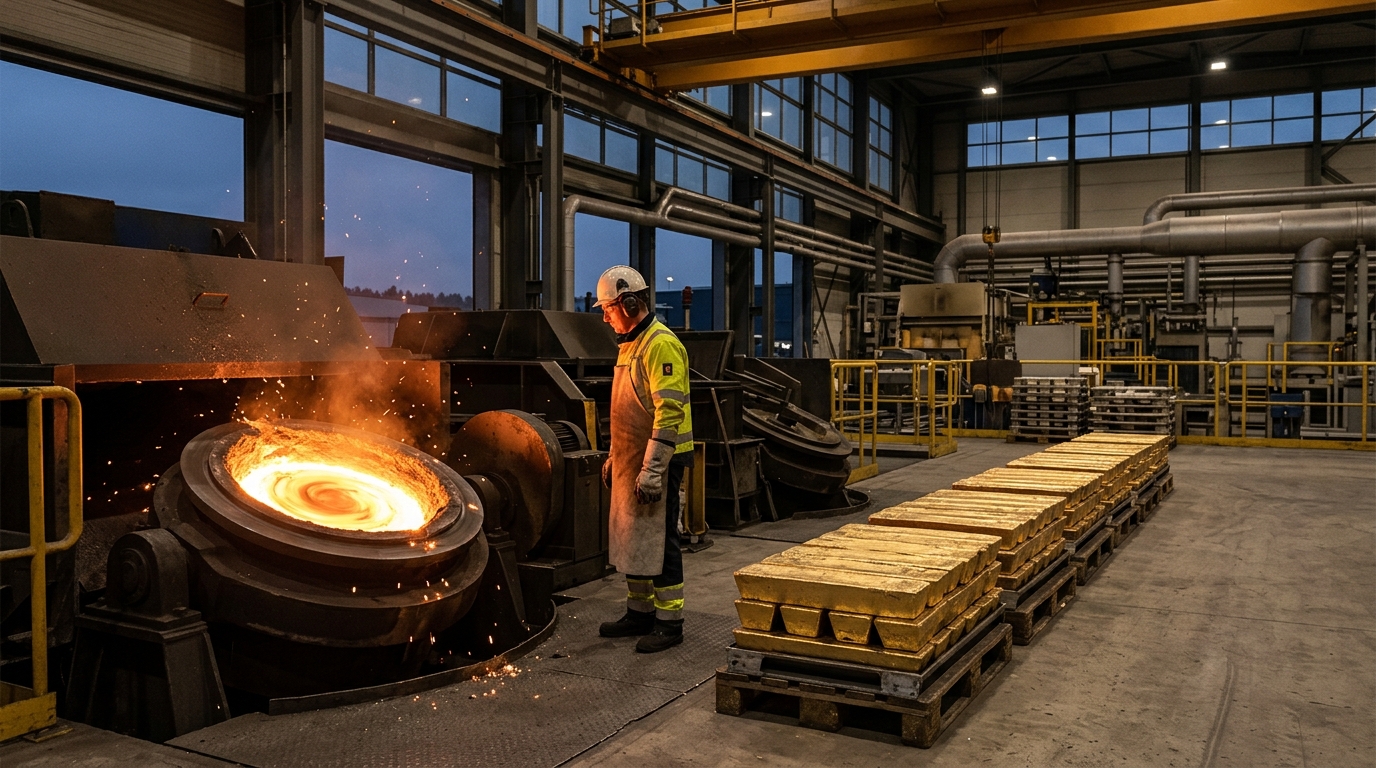
Gold’s been relentless.
And yet the trade has felt… weirdly un-crowded in the equities. Not empty. Just not “everyone’s talking about it at lunch.”
The part that’s easy to miss (because it’s less fun than “gold to the moon”) is that when the metal stays high long enough, a few miners stop being optionality plays and start looking like cash machines. Not “maybe one day.” Like, right now.
Kinross Gold (KGC) is on that short list. And importantly: Kinross releases Q1 2026 results after the close today, Wednesday, April 29, 2026, with the conference call tomorrow morning (Thursday, April 30, 2026 at 8:00 a.m. EDT).
So going into the print, I’m not going to lean on squishy “consensus screens say X” numbers that change depending on where you look. I’m sticking to what the company has already reported and committed to… then I’m watching whether tonight’s report confirms the same behavior.
14 times bigger than the SpaceX IPO
Forget about SpaceX…
Elon Musk is up to something much bigger…
A virtually brand-new company…
Built from the ground up.
And it could be worth over $25 trillion.
That’s 14 times bigger than SpaceX.
Click here to find out how you can claim a stake in Elon’s secret IPO, today.
The part that matters (and it’s already in the filings)
For full-year 2025, Kinross reported:
- Revenue: $7.051B (up from $5.149B in 2024).
- Attributable free cash flow: $2.474B (up from $1.340B in 2024).
- Net earnings: $2.390B (vs $948.8M in 2024).
- Net cash: about $1.0B at Dec 31, 2025 (cash and equivalents about $1.7B).
That free cash flow line is the headline. It’s not a rounding-error improvement – it’s a different company than it was two years ago.
There’s also a “tone” shift that shows up when a miner is genuinely printing cash: language starts moving from “balance sheet repair” to “what do we do with the excess?” That’s where KGC has been living lately.
Management guided to returning roughly 40% of free cash flow to shareholders in 2026 through buybacks and dividends. And they bumped the quarterly dividend again to $0.04 (another 14% step-up), which they described as a 33% total increase since Q3 2025.
Slight tangent, but it matters: miners love to announce buybacks. They love it. Executing buybacks is the hard part – especially when the stock is strong and the temptation is to “save the authorization for later.” When you read tonight’s release, look for the actual dollars spent and share count movement, not just the plan.
Also worth saying out loud: a net cash balance sheet in this sector changes the whole vibe. It’s not just safety. It’s negotiating leverage, optionality on project sequencing, and a lot less “please don’t cut the dividend” anxiety.
What I’m watching tonight
Two things, mainly. (Okay… three. But the third is sneaky.)
1) Does the cash conversion stay clean?
If gold stays elevated, the operating leverage is supposed to show up as bigger free cash flow, not just “adjusted” metrics and slide-deck enthusiasm. I want to see whether Q1 keeps that 2025 cadence going.
Translation: watch for working capital noise, sustaining capex timing, and whether the quarter “looks great” only because something got pushed to Q2. That’s common in mining. It’s not always bad – but you want to know what you’re buying.
2) Any drift versus 2026 guidance.
In the FY2025 release, Kinross framed 2026 guidance as roughly ~2.0 million attributable gold equivalent ounces (+/–5%). That’s the anchor I’d use (not random range numbers floating around on fin-sites).
On costs, I’m watching how they talk about the moving pieces: fuel, consumables, sustaining capex timing, and whether they’re seeing any “quiet inflation” creep back in. The market tends to forgive one quarter of cost wobble. It does not forgive a tone change like “we’re reassessing the cost environment.”
3) Capital allocation language that hints at future dilution.
This is where I get a little skeptical. When miners are flush, they’re tempted to do something “strategic.” Sometimes that’s great. Sometimes it’s a top-of-cycle deal dressed up as long-term vision. If you see a lot of talk about M&A “opportunities,” I’d rather see it paired with very strict return hurdles.
And yes, spot gold matters… but you don’t need a live ticker in the email to get the point. If the metal’s high, miners that are already net cash and already returning capital tend to get re-rated faster than the ones still selling a turnaround story.
Here’s the part people skip: miners don’t usually re-rate because someone got excited on TV. They re-rate when the tape starts treating the cash flow as durable. You’ll see it in how sell-side models stop hair-cutting the next year’s FCF, and you’ll see it in how dips get bought without needing a gold spike that day.
One more thing: RBC recently upgraded Kinross to Outperform and raised its price target to $45, pointing to cash flow strength and upside from a higher gold tape.
The Straight Headlines Are Everywhere – But This Isn’t
The headlines are loud right now – oil, volatility, uncertainty.
But while attention shifts, something else keeps working quietly in the background.
An overlooked investment that’s compounded at an extraordinary rate over time.
Most people never even look at it.
Zooming out (keep the forecasts in their lane)
Big-bank gold targets are useful as sentiment tells, but they get misquoted constantly. The clean way to say it:
- Goldman Sachs (base case, per Reuters pickup): $4,900/oz by December 2026.
- J.P. Morgan: widely-circulated targets around ~$5,000-ish into late 2026 depending on the desk and the exact measure (average vs year-end).
I’m not building the thesis on “gold hits X by Y.” I’m building it on the simpler setup: if gold stays elevated long enough, the miners with real operating leverage + real capital returns start to look less like “cyclicals” and more like cash compounding machines. For a while, at least.
And if I’m wrong? The failure mode is pretty straightforward. A real drawdown in gold compresses margins fast, the market stops paying up for “durable FCF,” and suddenly everyone cares about costs again. It’s not mysterious.
But that’s also why tonight matters. It’s one of those prints that can either confirm the new regime (“yes, the cash is still there”) or quietly plant the first seed of doubt (“good quarter, but…”).
KGC is worth a closer look before the print clears.