
July 29, 2026
Lemonade Beats Q2 Sales, Stock Slides
Big growth, but the market focused on what comes next.
First a note from Weiss Ratings
Dear Reader,
Anthropic – the maker of Claude AI – is going public.
In fact, reports say it’s just days away now.
Perhaps as soon as October.
The value of the company has doubled since the announcement.
Many experts think Anthropic could be worth $3 trillion by IPO day.
Google, Amazon and Nvidia are all heavily invested in this IPO.
Even Microsoft, who used to be associated with OpenAI’s ChatGPT, is invested in Anthropic.
Goldman Sachs, Morgan Stanley and JPMorgan are tripping over each other to get a private stake before the IPO.
Even whole countries are invested …
Including the United Arab Emirates, Singapore and Qatar.
That’s because Anthropic is a rare breed … the rarest, in fact.
You see, venture capitalists call a private company worth over a $1 billion a unicorn.
$10 billion and it’s a decacorn.
$100 billion is a hectocorn.
But what do you call a private company worth over a trillion dollars?
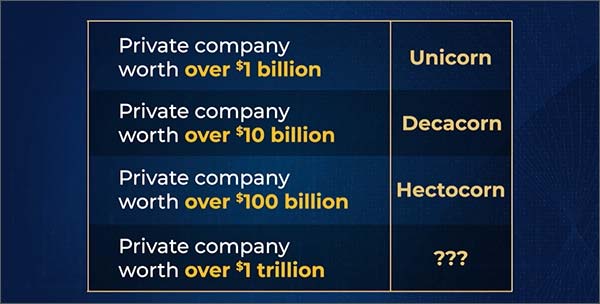
Anthropic is there, right now.
The first of its kind.
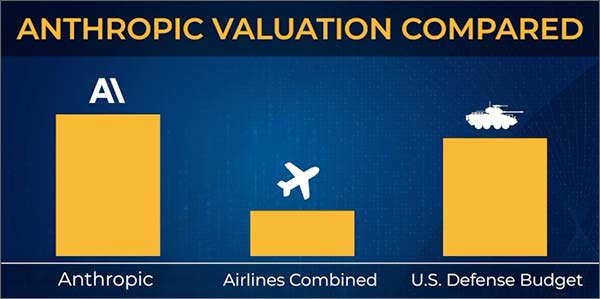
It’s worth more than every American airline – combined.
It’s even bigger than the U.S. defense budget …
Anthropic’s annualized revenue grew by 80 times in the first quarter.
They’ve already filed the paperwork for an IPO …
Some estimates say they are going public as early as October.
Most analysts agree, it’s going to happen sometime this fall at worst.
Now, here’s what’s really exciting …
You can get a stake in this company, right now.
Today.
Before it goes public.
And have an opportunity to cash in on day one of this IPO.
All the best,

Michael Robinson
Director of Tech Strategies
Weiss Ratings
Lemonade Beats Q2 Sales, Stock Slides

Watching Lemonade on July 29 was a good reminder that the market does not hand out points for effort. Or even for a clean beat.
The company reported Q2 2026 results (quarter ended June 30, 2026) with revenue of $294.4 million, up 79% year over year. In the shareholder letter, Lemonade also called out In Force Premium of $1.43 billion, up 32.4%, and total customers of 3,308,666, up 23%. Gross profit rose to $113.2 million, up 76%. Net loss was $43.4 million, or $0.56 per share. Adjusted EBITDA loss improved to $18.7 million.
And yet the stock sold off hard, with traders pointing to roughly a 15% down move right after the release.
Here’s where I’m at: the beat itself was not the debate. The debate was the shape of the next few quarters.
Lemonade guided Q3 2026 revenue to $323 million to $326 million, and full-year 2026 revenue to $1.214 billion to $1.220 billion. It also guided Q3 adjusted EBITDA loss to $23 million to $20 million, with full-year adjusted EBITDA loss of $51 million to $47 million. Importantly, it reiterated that the first positive adjusted EBITDA quarter is still expected in Q4 2026, implying the progress is real but not linear.
Slight tangent, but it matters. High-growth insurers are basically judged like software companies when momentum is strong, and then judged like insurance companies the moment the market gets picky. When that flip happens, two things start to dominate: underwriting stability and operating leverage timing. Not someday, but soon.
On underwriting and efficiency, the shareholder letter had a detail I think the market should not ignore: Lemonade’s LAE ratio (claims handling cost as a percent of premium, excluding prior period development) fell to a record-low 5% in Q2. Management framed industry-average LAE ratios around 9%. If that gap holds as Lemonade scales, it is not just a cost story, it is a compounding advantage story.
But the other side of the coin showed up too. Operating expense (excluding net loss and loss adjustment expense) rose 41% year over year to $182.2 million, driven in part by higher growth spend for customer acquisition. That is not automatically bad. Still, when a stock is priced for a smooth march to profitability, investors tend to punish any hint that the march stays bumpy.
What I’m watching next is simple:
- Whether In Force Premium growth stays in the low 30% range as guided for Q3 and full-year 2026.
- Whether the claims efficiency gains (that 5% LAE ratio) persist as Car and Home scale.
- Whether Q4 2026 actually lands as the first positive adjusted EBITDA quarter, because that milestone can change the stock’s whole tone.
If you want one clean takeaway, it’s this: Lemonade’s Q2 was strong. The selloff looked more like a valuation and timing argument than a growth argument. Worth watching, but only if the next two quarters keep tightening the gap between scale and profitability.
Take a closer look at the shareholder letter details and the Q3 guide. That is where the real disagreement is.
 Rising Star Stocks