Dear Friend,
In 1976, a Chevron drilling team tapped an energy source so powerful it could run a city.
No fuel costs. No carbon. No supply chain.
They proved it worked. Then they killed the project.
Unocal proved it worked. Killed it.
Texaco proved it worked. Killed it.
Three of the largest oil companies on Earth confirmed the same thing.
And all three buried the results for the same reason: it would have destroyed their core business.
For fifty years, the official line was “the technology isn’t ready.”
The technology was fine. The threat was too big.
Now one company has spent sixty years perfecting what Big Oil refused to touch.
Google just locked in a 15-year contract. Bill Gates wrote a $100 million check. And on November 17th, the government hands it a competitive edge no other energy source gets.
Big Oil had fifty years to act. They chose not to.
See the company that didn’t wait >>
“The Buck Stops Here,”
Kelly Maguire
Behind the Markets
TeraWulf Has a Signed Anthropic Contract. The Market Is Ignoring It.
AI power stocks don’t lack for drama. What they mostly lack is contracted revenue. TeraWulf (NASDAQ: WULF) is one of the few names that can say otherwise, and the market spent the past week selling it anyway.
The Political Overhang
Tuesday’s midterm elections handed Democrats control of Congress on the back of a wave of backlash against AI data centers. Voter anger over data centers helped fuel Democratic victories in the 2026 midterms, while well-funded pro-acceleration groups struggled to turn their spending into political wins. Forty-one data center-related ballot measures were up for a vote in 10 states. The sector sold off Wednesday and again Thursday. TeraWulf fell about 14% with crypto and AI data center peers after the midterms, extending Wednesday’s 6.6% decline, as Bitcoin slid and investors dumped crypto-linked and AI data center names.
The selloff pushed WULF to a new 52-week low. The stock sat about 65% below its 52-week high of $29.84.
That’s real pain. It is also, arguably, a market that is pricing politics into a company whose revenue comes from signed leases, not congressional goodwill.
What the Contract Actually Says
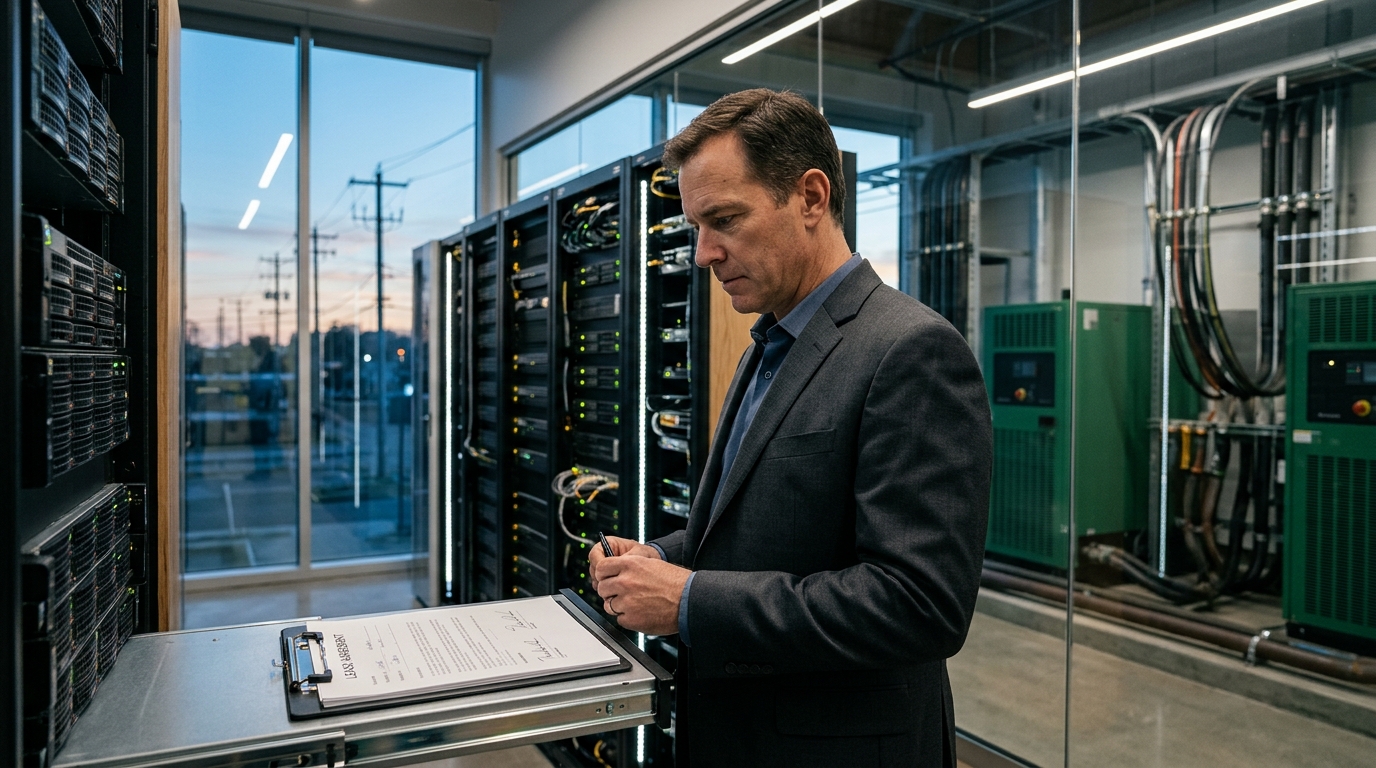
The core asset here is straightforward. TeraWulf has executed a 20-year lease agreement with Anthropic at its Justified Data campus in Hawesville, Kentucky. The lease is expected to generate approximately $19 billion of contracted revenue over the initial term. Under the lease, TeraWulf will provide Anthropic with approximately 401 MW of critical IT load for high-performance computing operations.
Then, on November 4, two days before this morning’s Q3 report, the deal got a creditworthy backstop. TeraWulf executed credit support agreements with Google LLC in connection with debt financing supporting approximately $19 billion of contracted lease commitments with Anthropic at its Justified Data Campus in Hawesville, Kentucky. If Anthropic misses rent or becomes subject to an insolvency event, Google can pay the rent due and assume the lease as tenant, or in certain cases pay a termination fee. This is not a letter of intent. It is a contractual backstop from one of the largest balance sheets on earth.
Google’s willingness to backstop a tenant’s obligations is consistent with a broader pattern. Google has committed to multi-decade infrastructure contracts before, using long-term power agreements to lock in capacity at scale.
The stock fell about 4% the same day.
The Operating Build
The Kentucky campus is the long-duration story. The near-term numbers come from Lake Mariner in New York, where TeraWulf has been methodically converting bitcoin mining infrastructure into contracted HPC capacity. The company generated second-quarter revenue of $44.8 million, including $31.9 million of HPC lease revenue representing approximately 71% of total revenue. A year earlier, that HPC line was zero.
TeraWulf is expected to release Q3 2026 results before the market opens on Friday, November 6. Some published consensus trackers put estimates around negative $0.18 per share and revenue of approximately $62.5 million for the quarter. If that revenue target holds, it would represent more than 20% sequential growth as additional capacity came online at Lake Mariner through the summer.
Zacks’ consensus has the company posting a quarterly loss of $0.12 per share, with revenues expected to be $70.43 million. Estimates vary, but the direction is consistent: revenue is growing, the mix is shifting toward contracted HPC, and the losses mostly reflect the cost of building ahead of tenant delivery.
Where the Real Risk Lives
This is not a simple buy. Google’s backstop won’t activate until TeraWulf finishes construction, leaving the company exposed on $4 to $4.5 billion in development costs. That is a construction risk, a financing risk, and a schedule risk bundled into one campus. TeraWulf also announced a definitive engineering, procurement and construction agreement with Fluor for development of the Justified campus on a guaranteed maximum price basis. A fixed-price structure helps contain cost blowout, but it does not eliminate execution risk entirely.
The midterm results add a layer of regulatory uncertainty. Even without immediate law changes, politicians may think twice before siding with the AI industry. Local permitting pressure and utility politics could slow future site acquisitions. The Kentucky campus, however, sits on contracted land with power already secured.
Analyst sentiment on WULF remains broadly positive, with a consensus rating of Moderate Buy and an average price target of $32.35. That gap between current trading levels and Wall Street targets reflects genuine uncertainty about execution, not a market that has simply mispriced the contract.
The Bigger Picture
Oklo (NYSE: OKLO) also reports this morning, and the contrast is instructive. Oklo is also scheduled to report Q3 results on Friday, November 6. That stock represents the promise of AI power. TeraWulf represents a lease that is already signed.
Today’s earnings call is the first management commentary since both the Google backstop and the midterm results. What management says about construction timeline, financing terms, and whether political headwinds have altered any tenant conversations could move this stock sharply in either direction. That is what makes today worth watching. The contract is real. The question is whether TeraWulf can deliver it on schedule.
 Rising Star Stocks