Why This Vote Matters Right Now
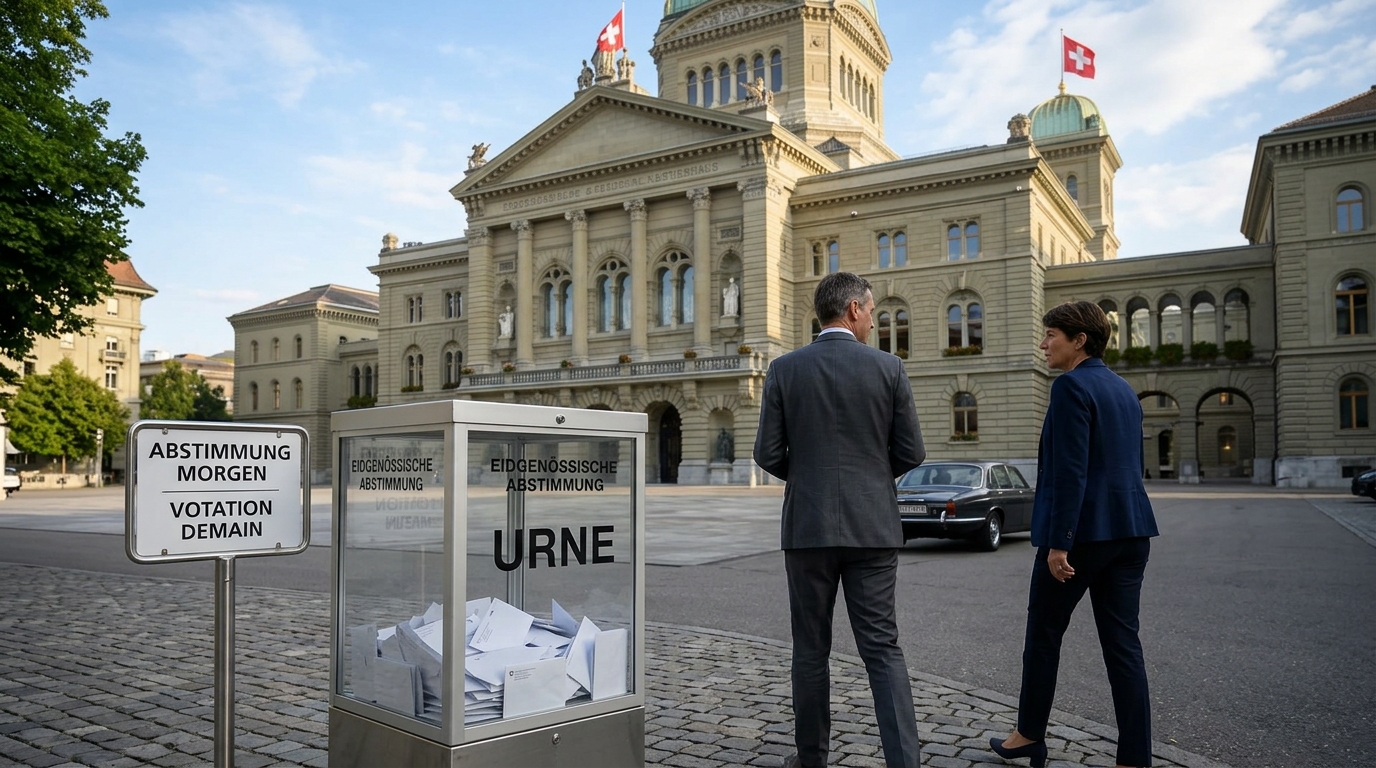
Swiss voters go to the polls tomorrow on four federal proposals. The one that matters to investors is the referendum on the amended War Materiel Act. A yes vote accepts Parliament’s December 19, 2025 revision, giving the Federal Council more latitude to approve exports and allowing transfers to a defined list of partner states even when those countries are involved in armed conflicts, subject to neutrality law and other safeguards. A no vote keeps the status quo, which has already cost Swiss defense its position in several European supply chains. The Federal Council and Parliament recommend yes. Pre-vote polls show a tight race, with recent surveys generally around the high-40s for each side.
The Business at Stake
Switzerland’s war materiel exports are meaningful but not enormous. In 2025, Swiss companies exported about CHF 948 million of war materiel under SECO authorizations. The problem is that strict re-export rules have alienated buyers. After Switzerland blocked Germany and others from re-exporting Swiss-made ammunition and vehicles to Ukraine, Germany excluded Swiss manufacturers from bidding on at least one major procurement order, and the Netherlands halted purchases of Swiss weapons. Industry leaders have called this vote a “go or no go” moment for the sector’s future.
Why Wall Street Cannot Buy the Obvious Names
Here is where the thesis runs into a wall. The two most prominent Swiss defense names, RUAG and Pilatus Aircraft, are not publicly listed. RUAG is state-owned. Pilatus, based in Stans, reported total sales of CHF 1.672 billion in 2025 and has remained privately held. SIG Sauer’s Swiss entity is not publicly listed either. Investors looking for a pure-play Swiss arms-export trade cannot buy one.
The Investable Angle: Rheinmetall With an Asterisk
The closest tradeable proxy is Rheinmetall, listed in Frankfurt. The stock closed Friday near €791. Its Swiss exposure is real, but it is a secondary factor for a company generating revenue across Germany and a widening international footprint. A yes vote is a tailwind, not a standalone catalyst.
What Could Go Wrong
Polls remain too close to price in a win. If voters reject the amendment, Swiss arms exporters face continued exclusion from European rearmament contracts. For Rheinmetall, that most likely means continuing to shift Switzerland-linked work toward other locations rather than a sharp share-price drop, since Swiss exposure is not the core driver. The separate VAT referendum proposes raising the standard rate from 8.1% to 8.5% to help finance the 13th AHV/OASI pension, and the increase cannot take effect before 2028. It requires approval by both a majority of voters and a majority of cantons.
The Bottom Line
Tomorrow’s Swiss referendum is genuinely consequential for the country’s defense industry. A yes vote removes a constraint that has caused real commercial damage. But the companies most directly affected are not on any exchange. The investable expression, Rheinmetall, is a compelling European defense story on its own terms, and a favorable Swiss vote adds to that case at the margin. Watch the result Sunday. Any Frankfurt pop on the open should be treated as an opportunity to do deeper work, not a reason to chase.
 Rising Star Stocks