
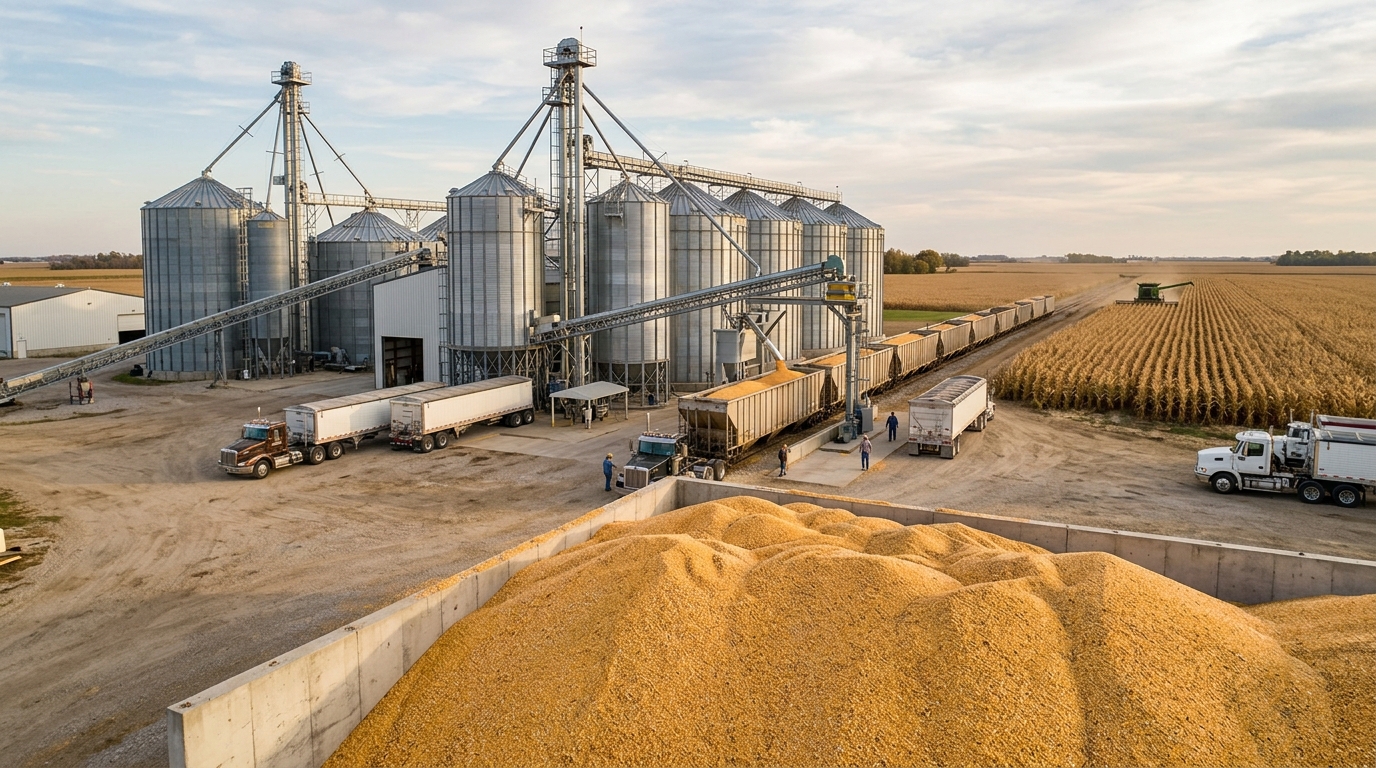
Corn traders are carrying a number into today’s session that no pre-report survey anticipated: 2.095 billion bushels. That is where USDA pegged September 1 old-crop corn stocks in its quarterly Grain Stocks report released September 30, a seven-year high and a figure that landed above every estimate in the Dow Jones survey, which had averaged 1.924 billion bushels with the high end of the range capped at 2.005 billion.
September 1 stocks came in roughly 170 million bushels above the average trade guess. DTN Lead Analyst Rhett Montgomery called the result bearish for corn. The market’s reaction was immediate: December corn settled at $5.00 and three-quarters, down 21 and a quarter cents on September 30. Chicago corn futures fell for a fourth consecutive session Thursday, losing another fractional increment to trade in a tight range between $5.00 and $5.03 a bushel.
Market Snapshot
The Grain Stocks report broke the third-quarter grain rally, with December corn down more than 4% on the day as a roughly 414,000-contract fund long was exposed to bearish demand data. Those stocks implied weaker demand than previously assumed, and they landed on a fund net long of more than 414,000 contracts as of September 22, a combination one analyst at RCM Alternatives said sets up a larger pullback as weak hands are forced out.
Off-farm stocks were up 44% from a year ago, while on-farm stocks rose 22%. The geographic concentration matters for basis: Iowa held 415.5 million bushels, up 23%; Illinois climbed 53% to 252.9 million bushels; Nebraska rose 50% to 248.1 million; and Kansas stocks were up 86% at 89.3 million bushels. Those states also carry the heaviest harvest pressure heading into October.
Stocks in Focus
- ADM: Lower corn prices compress origination margins in the short run but ADM’s processing businesses benefit from cheaper feedstock. The company raised full-year 2026 adjusted EPS guidance to $5.15–$5.60 after its second quarter, reflecting expected improvement in crushing and ethanol. A sustained move lower in corn is a mixed signal: better input economics, but softer merchandising revenue.
- BG (Bunge): Watches corn closely for export and logistics volumes. Weaker basis in the interior cuts into river-freight profitability.
- MOS and CF: Fertilizer demand in the next planting cycle is the read-through here. The September report closes the books on the 2025/26 marketing year, and these stocks become beginning stocks for 2026/27. Abundant carryover pressures corn acres and, with them, nitrogen demand projections.
- DE: Harvest pace is the immediate variable. Rain from the remnants of Hurricane Polo is spreading from the Southwest through the Plains into the Midwest, with flooding risk extending corn and soybean harvest delays. Fewer field hours in October shifts combine utilization projections and can affect dealer sentiment on big-ticket equipment.
Weather Overlay
The remnants of Hurricane Polo, one of the most powerful Pacific storms on record, are tracking northeast through the Midwest after crossing into northern Mexico, having merged with a cold front over the southern Plains. A surge of tropical moisture is spreading precipitation from Kansas into Nebraska, Iowa, northern Illinois, and southern Wisconsin, with a 50 to 80 percent probability that some locations from Lincoln through Des Moines to Madison receive two inches of rain or more. That alone would slow harvest further in fields already behind schedule.
The weather is the one thing preventing a deeper selloff. Harvest delays from Hurricane Polo’s remnants are the main offset to further liquidation. A harvest window is forecast to open around October 3–12, according to Nutrien’s weather intelligence team. If that window widens and fields firm up, corn would face renewed selling pressure as new-crop supply accelerates into the elevator system.
The Cheat Sheet
- Top Theme: A 173-million-bushel surplus shock sets the tone for the entire ag complex as October opens.
- Stock to Watch: ADM, where cheap feedstock supports processing margins but softer origination is a near-term drag.
- Sector to Watch: Agricultural inputs. If $5.00 corn holds or breaks lower, fertilizer demand forecasts for the next crop year get revised down.
- Biggest Risk: The fund long in corn was still enormous as of September 22. If harvest weather improves and more liquidation follows, the next support level below $5.00 becomes the question traders need to answer before positioning.
- One Thing to Remember: Someone used roughly 230 million bushels less corn than USDA’s balance sheets assumed, and feed and residual is where that shortfall lives, a line USDA may have to cut on October 9. That WASDE date is the next major event risk for this trade.
 Rising Star Stocks