
October 7, 2026
Bonus Content: At JFK, Warehouse Rents Just Broke $30. There Is Nowhere Left to Build.
Dear Reader,
“I almost think you’d scare the public if you put this out.”
Former Goldman Sachs president Gary Cohn said those words at a public FDIC meeting on November 9, 2022.
What were they discussing?
How to explain the resolution of major financial institutions while maintaining public confidence.
That context matters as much as the quote.
Watch the exchange and see what prompted the remark.
There’s also a date worth putting beside that discussion: October 26, 2026.
That’s when public-comment windows close on four federal information collections covering deposits, customer-data security, securities-market activity and institutional trade settlement.
Our coverage puts the exchange and those proceedings in one place, alongside a counter tracking bank-branch closing records.
See the discussion and the four approaching comment deadlines.
Bill Brocius
Author of The Vanishing Dollar and Digital Dollar Exposed
Dedollarize News
At JFK, Warehouse Rents Just Broke $30. There Is Nowhere Left to Build.
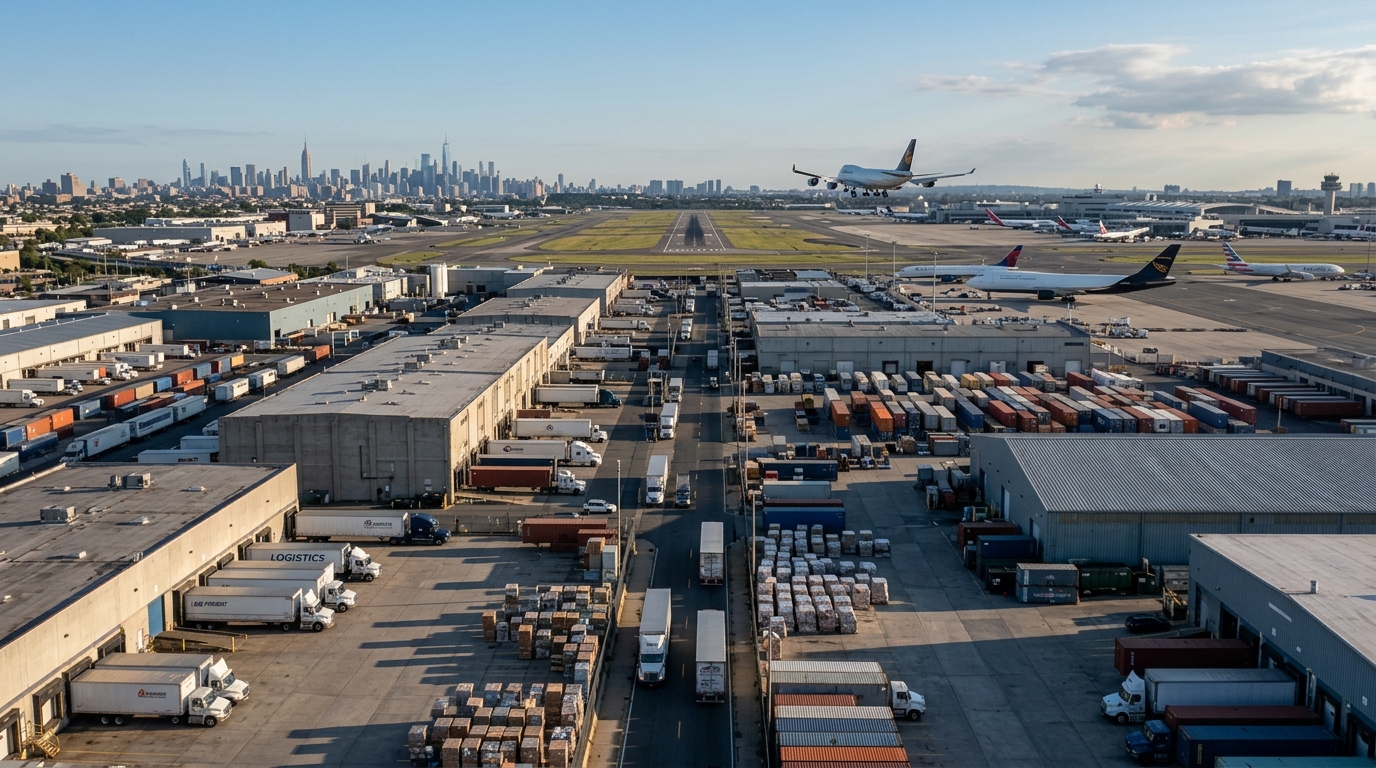
Walk the industrial streets ringing John F. Kennedy International Airport and the pitch is simple: get close to the runway, pay whatever it takes. Warehouse rents around JFK have officially broken the $30-per-square-foot barrier, squeezing freight handlers and airport-support outfits that prize being minutes from the runway over anything else. That number matters not just in Queens, but as a signal of something happening at major air cargo hubs globally.
Industrial tenants signed almost 770,000 square feet of deals in submarkets serving JFK in 2025, a 63.4% year-over-year increase, and asking rents for triple-net leases eclipsed $30 per square foot for the first time in the market’s history. That last detail is the one most investors miss. It is not just demand driving rents; it is the physical impossibility of adding supply.
The Supply Wall
The airports commanding the highest rent premiums, including LAX, JFK, MIA, ORD, and Philadelphia, serve markets that are densely populated and lack developable land, contributing to premiums of 24% or more at properties within a five-mile radius. At Frankfurt’s CargoCity Süd, land directly adjacent to the airport has been cited in the range of roughly €470 to €560 per square meter, above typical suburban levels often cited around €250 to €420 per square meter.
The math for tenants is perverse but rational. Transportation comprises 45% to 70% of overall supply chain costs, compared with just 3% to 6% for occupancy costs, so locating near airports can be highly cost effective even at record rents.
Who Is Paying and Why
Pharmaceuticals continue to play a central role, with the need for temperature-controlled logistics remaining strong. High-tech equipment, specialized machinery, and premium express shipments further reinforce the relevance of air freight. E-commerce now represents about 25 to 30% of total air freight tonnage, up from about 15% in 2019, and those shipment flows do not distribute evenly. They concentrate at gateway hubs, which concentrate demand for the land beside them.
Specialized developers have taken notice. Realterm and the Susquehanna Area Regional Airport Authority announced in July 2026 a partnership to develop a new cargo facility at Harrisburg International Airport, delivering up to 105,000 square feet of first-line cargo space sitting directly adjacent to the airfield apron, allowing aircraft to park at the building’s doors and cargo to move straight from plane to warehouse. Realterm’s recent projects include the $270 million Modern Air Cargo Facility at JFK and the Northeast Cargo Campus at O’Hare, encompassing about 900,000 square feet.
The Structural Bet
New industrial supply will remain constrained in 2026, as starts are down 25% compared to the 2017 to 2019 average, and deliveries in 2026 will be down more than 70% versus the pandemic peak. Airport-adjacent land faces an even harder ceiling: zoning, flight-path restrictions, and existing infrastructure leave almost no room to build new.
Despite strong global air cargo demand, up 11.3% year-over-year in 2024, airport investment has heavily prioritized passenger terminals, retail, and parking, leaving cargo facilities underdeveloped, especially in emerging markets where land and apron constraints are most acute. Airports competing for passenger revenue are inadvertently doing developers a favor: every gate expansion that crowds out a freight apron tightens the supply of the only real estate that matters to a cold-chain shipper or express operator.
The premium is not going away. It may only be getting harder to access.
 Rising Star Stocks