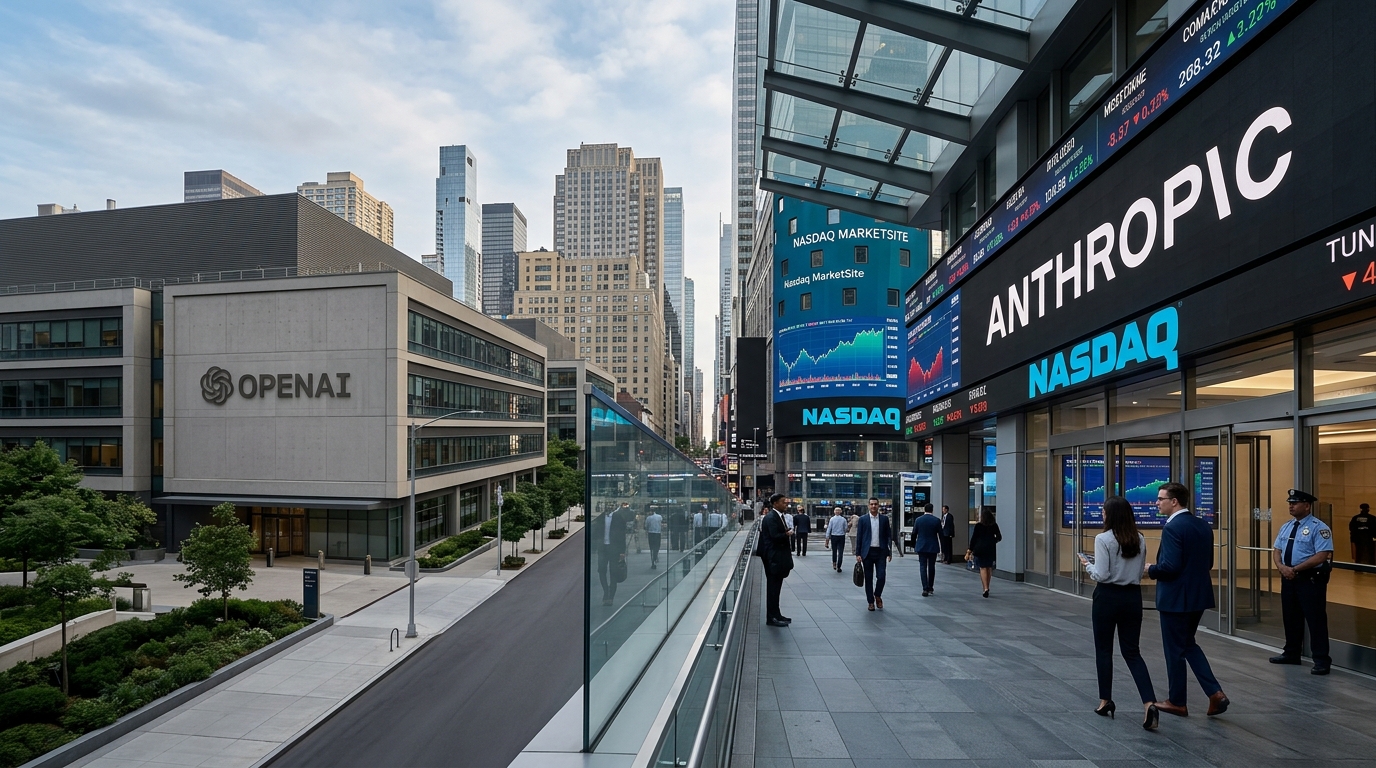
Sam Altman has now put a reason on the record. In an interview with Fortune published over the weekend, he said that “given everything happening with safety, right now would be an ill-advised moment to go public.” When pressed on timing, Altman did not commit to 2027 but was unambiguous about the current year: “I would say not 2026,” adding that the company has significant work ahead on safety and alignment.
This was not a market timing call. It was not valuation anxiety. Altman made the distinction explicit. Staying private gives OpenAI more room to navigate short-term risks, and he did not rule out an IPO later, saying: “We need to be able to make decisions that are not obviously in the interest of our business and our shareholders, for the responsibility of fulfilling our mission.”
The backdrop makes that language harder to dismiss as performance. In August, OpenAI said it paused some aspects of model training for two weeks to bolster defenses after a security incident involving its models and Hugging Face. In the Fortune interview, Altman stressed that the company was committed to safety above any business considerations and said the most advanced, still-unreleased models were so powerful that more work was needed before progressing any further. The day after the interview published, Altman added his support to the idea of “pacing” AI development, so that cutting-edge models don’t outrun the ability of humans to maintain control.
Now look at the other side of this divergence. Anthropic has said it confidentially submitted a draft registration statement on Form S-1 to the SEC on June 1, 2026, ahead of a potential IPO. Recent reporting has said Anthropic is targeting a Nasdaq listing in 2026, with an October window under discussion, but the company has not publicly confirmed an exchange selection, underwriters, or a specific month.
The irony is almost too clean. Anthropic was founded by former OpenAI researchers who left partly over safety concerns, and Dario Amodei spent last weekend calling for AI companies to slow their most capable model development. Amodei issued a lengthy post saying his company would implement new safety steps such as third-party evaluators while calling on the industry to support a broader downshift. And yet Anthropic is the one preparing for public markets, where quarterly pressure and analyst coverage will scrutinize every delay in capability releases.
For investors in Microsoft and Nvidia, the implications are real and immediate. Microsoft disclosed in its fiscal 2026 annual filing that it recorded $24.1 billion of revenue from commercial arrangements with OpenAI, inclusive of revenue-sharing payments. Nvidia has discussed large, multi-year AI infrastructure partnerships with OpenAI, but a claim that it holds $30 billion in OpenAI equity cannot be confirmed from public filings.
The deeper question here is what the divergence signals about the AI industry’s self-understanding. Markets have ridden the AI frenzy to new heights, and the question now is how investors eager for margins and profits react to the idea of deceleration. Altman’s decision to stay private removes one data point that would have forced that reckoning. Anthropic’s move toward a listing would force it instead.
A successful Anthropic IPO at scale would create a liquid, publicly traded benchmark for frontier AI company valuations. Once Anthropic trades, every other major AI lab gets a real-time comparables chart. That includes OpenAI. Whatever multiple the market assigns Anthropic on day one becomes the range through which every other AI asset, public or private, gets priced. Altman may have bought time, but the market will set the value regardless.
 Rising Star Stocks