September 29, 2026
Bonus Content: Factories Are Listening for Failure Before It Happens

What If the Gold & Silver Run Isn’t Done?
Gold and silver have already made a lot of investors feel late.
The majors moved first. The obvious names got the headlines. And now, after one of the strongest precious metals runs in years, plenty of investors are asking the same question:
Did I already miss it?
Maybe not.
Because when a metals cycle gets this hot, Wall Street usually starts hunting for the next layer. Not the giants everyone already owns. The smaller, stranger, overlooked stories that still have something left to prove.
That is where this under $1 gold-silver story starts to get interesting.
It’s not waiting years on a drill result. It’s targeting 2026 production from material already sitting above ground, with potential cash flow.
So while gold and silver are already in motion, this one may still be sitting in the part of the curve investors tend to miss..
See why this under $1 gold-silver story is gaining attention…
Factories Are Listening for Failure Before It Happens
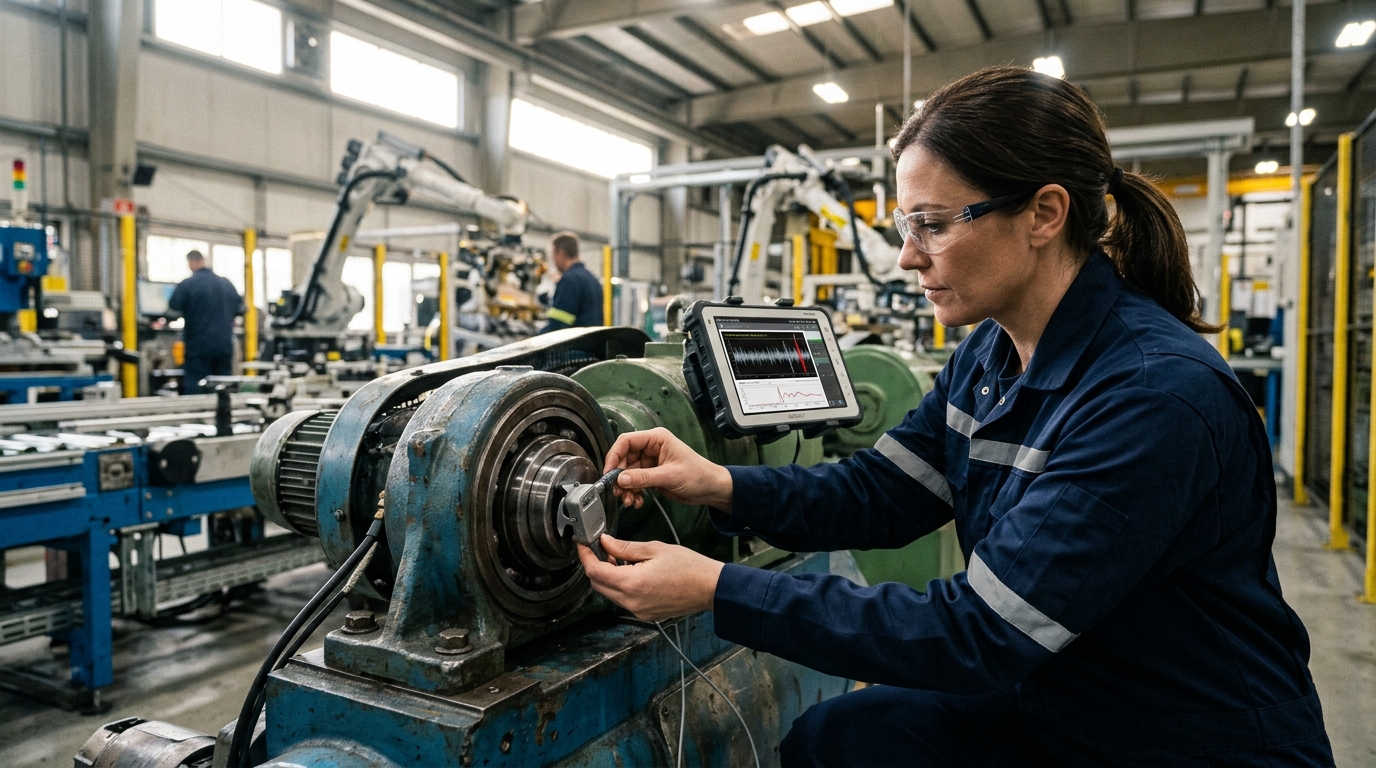
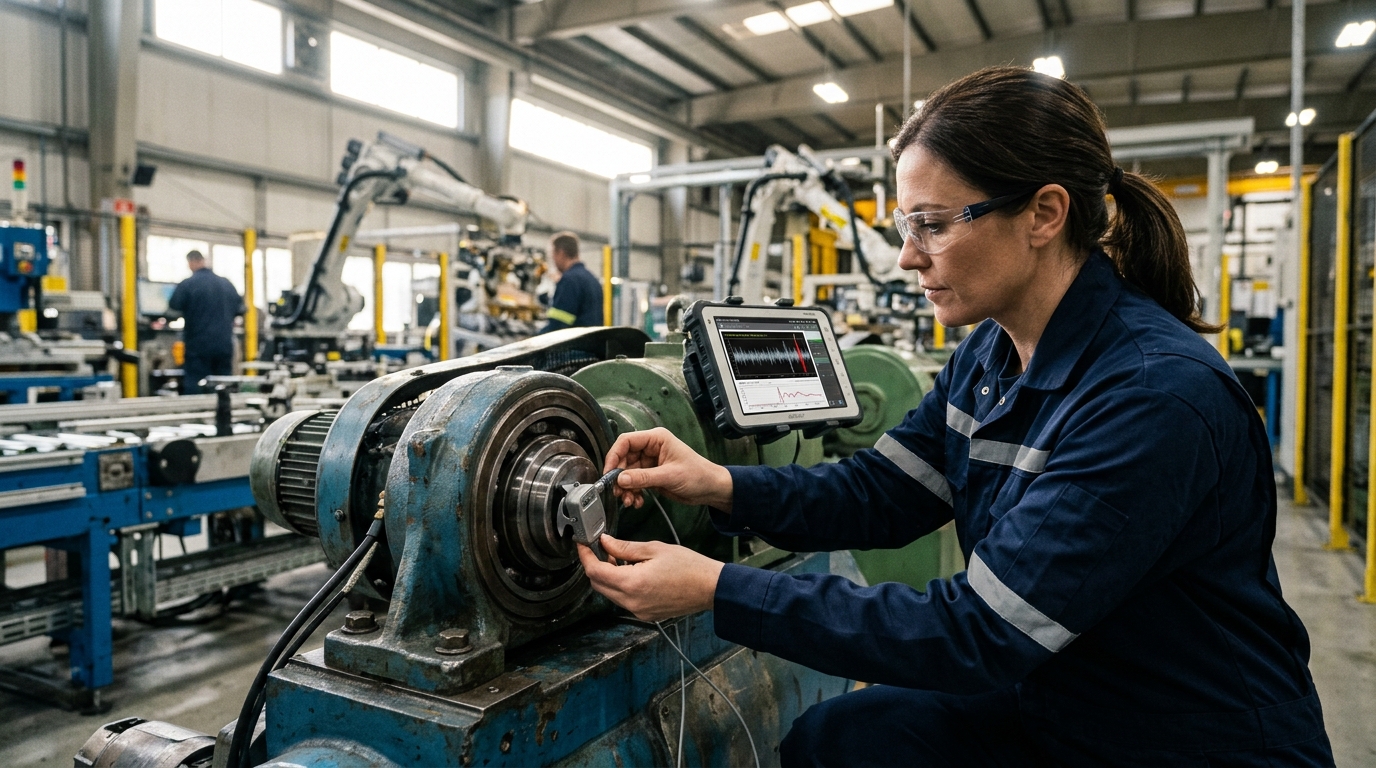
There is a bearing in a compressor somewhere on an automotive line right now that is about to fail. The plant’s vibration monitors have not caught it yet. The thermal cameras are clean. But a high-frequency acoustic sensor clipped to the housing is already hearing it, a faint, irregular friction signature that human ears cannot detect and that conventional monitoring may not flag for weeks.
That is the core proposition behind acoustic and ultrasonic predictive maintenance, and in 2026 it is graduating from niche experiment to plant-floor standard.
Why Listening Beats Watching
The critical advantage is timing. Acoustic emission and ultrasound can detect the initiation event, the micro-crack, the turbulence, the first friction, while vibration and thermal sensors often pick up secondary effects after a fault has already grown. Some vendors and industry sources claim reliability programs that integrate acoustic monitoring can achieve roughly 30 to 50 percent lower unplanned downtime than those relying on vibration data alone.
That gap matters because unplanned downtime is often cited at about $260,000 per hour across manufacturing, and in automotive plants widely repeated estimates put the figure as high as $2.3 million per hour. Each hour of unplanned stoppage is also commonly cited as costing roughly 50 percent more than it did in 2019.
The Hardware Is Finally Cheap Enough
Three forces converged to make widespread acoustic monitoring viable. Some commodity IoT sensor components can cost well under one dollar at scale, making it economically feasible to instrument more equipment, not just the ten most expensive machines. Edge AI chips can now run machine-learning inference directly on the factory floor. And cloud infrastructure can ingest the massive volumes of continuous sensor data that large industrial operations generate.
Augury’s Halo U2000 ultrasonic sensing, introduced as part of its ultra-low-RPM offering, extended capability by collecting high-frequency data samples up to 100 kHz on machinery rotating as slowly as 1 RPM. That matters because slow-speed equipment, the paper calenders, the extruder screws, the sugar crystallizers, was precisely the asset class where acoustic monitoring previously fell short. Traditional vibration analysis produces almost no signal at ultra-low RPM. Ultrasound can pick up lubrication failures and early bearing wear well before vibration data shifts.
The Market Is Pricing This In
The predictive maintenance market was valued at roughly $13.9 billion entering 2026 and is projected to reach $23.8 billion by 2031, an 11.4 percent annual growth rate. Manufacturing leads adoption, while AI-driven platform software is often cited as one of the fastest-growing layers. Asia Pacific, where China and India are running large-scale Industry 4.0 programs, is widely described as the fastest-growing region.
Deployments are frequently reported to deliver 20 to 40 percent maintenance cost reduction and several OEE availability points, based on industry benchmarking ranges. Payback can arrive within months, often within the first prevented failure on a critical asset.
The Real Risk Is Staying Reactive
The honest caveat: most manufacturers still run reactive programs. Legacy system integration is expensive. Data management complexity is real. And alarm fatigue, too many undifferentiated alerts, has undermined more than a few early deployments. The platforms gaining traction are those moving beyond prediction toward prescription, telling a technician not just that a bearing is degrading, but which bearing, which part to order, and when to schedule the fix. That specificity is what converts a software alert into an avoided shutdown.
Acoustic sensing is not a silver bullet. It is, however, a clock. And on most factory floors, that clock is running ahead of everything else on the maintenance stack.
 Rising Star Stocks