

September 24, 2026
Bonus Content: IonQ Ran Real-Time QEC Decoding on a Laptop Chip
Below is an important message from one of our highly valued sponsors. Please read it carefully as they have some special information to share with you.
Dear reader,
This might be the most valuable document I’ve ever uncovered.

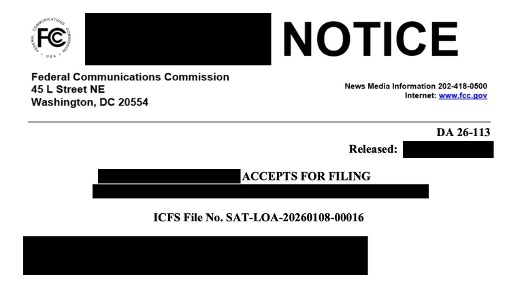
What’s under the black bars could change your life forever.
Elon quietly filed this document with the federal government.
And what’s inside could be bigger than Tesla, SpaceX, and xAI combined.
Big enough, I believe, to mint a record breaking wave of new “Musk Millionaires” over the coming years…
That’s because Elon is going after the largest cash pile in history.
Artificial Intelligence.
And what is in this filing proves he is about to make Bezos, Altman and Zuckerberg beg for mercy.
Look…
I called NVIDIA in 2008, Bitcoin in 2013, and his Super IPO years before they turned everyday Americans into millionaires.
And what Elon is doing next could be the biggest money making opportunity of them all.
Luckily, almost nobody knows this exists.
But it won’t stay quiet for long. Once it goes mainstream, your chance to get in early is gone.
If you missed out on Tesla…
If you missed out on Bitcoin…
If you missed out on NVIDIA…
This could be your final shot to make up for every other opportunity you’ve missed.
Don’t let one more click and two more minutes of your time be the reason you miss out again.
Regards,
James Altucher
IonQ Ran Real-Time QEC Decoding on a Laptop Chip

Quantum computers have a dirty secret. The hardware that runs quantum calculations is only half the problem. The classical computer tasked with catching and correcting errors in real time has historically been the system’s weakest link, a processing bottleneck so severe it could force the quantum processor to stall and wait.
IonQ just removed that bottleneck with a laptop chip.
What IonQ Actually Did
On September 22, IonQ announced what it describes as the industry’s first end-to-end real-time quantum error correction decoder running on a single standard off-the-shelf CPU. The hardware in question: an Apple M4 Max in a MacBook Pro.
The numbers behind the claim are worth slowing down for. IonQ’s dual-decoder architecture handled benchmark circuits simulating up to 408 logical qubits executing more than 31.5 million individual quantum operations at what the company calls MegaQuOp scale. In its arXiv benchmarks, IonQ reported that decoding delay stretched the computation by less than 0.3% under a favorable noise assumption, though it could stretch by up to 12% under a higher error-rate assumption.
Nicolas Delfosse, a paper co-author and IonQ’s quantum research lead, put it plainly: the single-CPU approach “provides a practical path to commercial-scale fault-tolerant quantum computing.” The underlying research was posted to arXiv by IonQ researchers Min Ye, Andrii Maksymov, and Delfosse, and has not yet been peer reviewed, a caveat worth holding on to.
How It Stacks Up Against IBM and Google
Context matters here, because IonQ is not the only company targeting fault tolerance. IBM’s published roadmap targets roughly 200 logical qubits running 100 million gates with its Starling system in 2029. Google’s Willow chip results on below-threshold error correction were published in December 2024.
IonQ’s 408-qubit simulation is a software decoder demonstration, not a live hardware run at that scale. That distinction matters. IBM and Google are grinding toward fault-tolerant hardware milestones; IonQ is showing that the classical decoding layer, the piece that has to keep pace with the quantum processor in real time, can run efficiently enough to not be the limiting factor. Those are different problems. IonQ solved one of them first.
The decoder ties directly into IonQ’s Walking Cat architecture, a fault-tolerant blueprint published in April 2026 that targets 80,000 logical qubits and 2 million physical qubits by 2030. Wall Street firm B. Riley reiterated a Buy rating this month with a $100 price target, pointing to a path to $1 billion in annualized revenue within four to six quarters.
The Financial Case
The commercial trajectory beneath the research is hard to ignore. IonQ posted Q2 2026 revenue of $80.1 million, 287% year-over-year growth, and raised its full-year standalone guidance to between $280 million and $290 million. After the SkyWater deal closed on July 31, IonQ updated its full-year 2026 revenue outlook to between $450 million and $460 million. The company reported $3.0 billion of cash, cash equivalents, and investments as of June 30, 2026.
The stock jumped in early trading on September 23 and finished the day up about 4.4%, on a day the Nasdaq fell about 1.1%. Valuation still looks stretched on trailing numbers.
The Risks
The decoder results are simulated, not demonstrated on live trapped-ion hardware at scale. The preprint has not been peer reviewed. IonQ is still burning cash aggressively, with adjusted EBITDA loss guidance of $310 million to $330 million for the full year. Competitors at IBM and Google carry far greater R&D resources and institutional relationships.
And the broader sector, Rigetti, D-Wave, smaller quantum plays, tends to move in sympathy with IonQ’s headlines without matching its technical depth. That correlation makes positioning in the space feel crowded at moments of peak enthusiasm.
Why This One Is Different
The classical decoder has always been an underappreciated obstacle. Proving it can run on one commodity chip, without slowing the quantum layer, is the kind of result that shifts engineering roadmaps rather than merely adding to a press release count. If the result holds under peer review and translates to live hardware, the cost structure of fault-tolerant quantum systems could look meaningfully different from current assumptions.
That is not a guarantee, it is a milestone worth watching closely.
 Rising Star Stocks