Hey,
I’m going to do something that may seem a little out of the “norm” these days…
I’m going to give you my #1 trade setup. For free.
It’s the same one I used to find winners like:
- 113% on GOOGL in under 2 hours.
- 240% on META in a single session.
I call it the “Opening Bell Breakout.”
It’s one simple setup I look for every morning. When it shows up…
I simply take the trade. And by 10 AM, I’m done.
I’ve put all the details on how it works in a simple, no-fluff guide.
No credit card required. No strings attached.
>> Get Your FREE “Opening Bell Breakouts” Trade Guide Here
This guide shows you the exact 15-minute window I trade, and how to spot the same setups the big funds are watching.
It’s yours for free.
Thomas Wood
P.S. This isn’t a 100-page novel. It’s a short, actionable guide you can read in about 10 minutes and put into action by tomorrow morning. Get it here.
Oasis Just Doubled Down on Vail Resorts. The Consumer Disagrees.
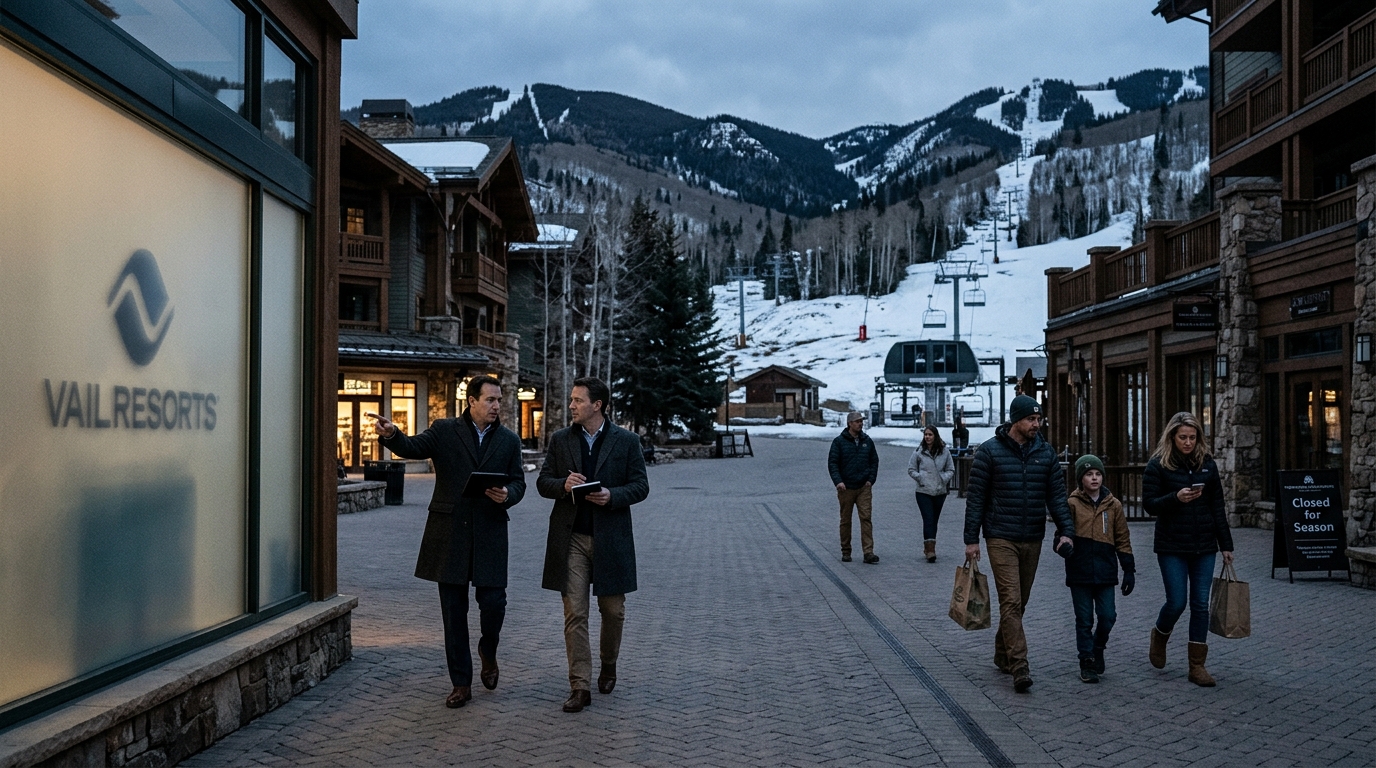
Ski season doesn’t open for another six weeks. But Oasis Management, the Hong Kong-based hedge fund already locked in a proxy fight with Vail Resorts, decided this week it couldn’t wait to add more.
Oasis increased its stake in Vail Resorts on September 22 from 6.2% to 7.4%, according to an SEC filing. The fund now owns about 2,623,912 shares of Vail common stock, with the position accumulated through open-market purchases totaling roughly $373 million. That’s a real number to put behind a proxy contest that, as of now, has no guaranteed outcome.
Oasis made four board nominations on September 11, proposing two-time Olympian Picabo Street, former Disney CEO Robert Chapek, financier M. Ashton Hudson, and Utah venture capitalist Bryce Roberts. Vail has said its board will consist of nine members following the 2026 annual meeting, meaning four Oasis nominees would represent nearly half the board if all were elected, though still short of a majority.
A Fixable Business, a Broken Season
The bull case for Oasis starts with the assets. The fund’s 13D filing argues that a reconstituted board would help Vail achieve improved operational efficiency, enhanced food and beverage offerings, and stronger partnerships with host communities, calling the company’s 42 resorts across four countries “irreplaceable.” That framing matters: Oasis appears to be betting on governance reform, not a breakup.
The operational record heading into this season gives them material to work with. Q3 fiscal 2026 net income attributable to Vail Resorts came in at $314.4 million, down from $389.7 million in the prior year, and Resort Reported EBITDA fell to $586.4 million from $647.7 million. CEO Rob Katz called it the most challenging winter Vail had ever experienced, with the lowest snowfall levels across the Rockies in more than 30 years. Weather is uncontrollable. Whether the board is set up to respond to it is a different question.
Sales of Vail’s 2026-27 season passes sagged roughly 10% in spring compared to the same period last year. That’s the number Oasis is betting recovers in the fall selling window, which is open right now. The trouble is what’s happening to the consumer on the other side of that transaction.
The Consumer Has Its Own View
US consumer sentiment fell to 48.1 in September, the lowest reading in four months, with the University of Michigan’s index down 7% from August and nearly 13% below year-ago levels. The survey dates back to 1952, and this is among the weakest readings on record.
Views of current and year-ahead expected personal finances both weakened about 10% this month, while concerns over high prices continued to climb. Year-ahead inflation expectations jumped to 4.6% in September, the highest reading since June. Then there’s the rate environment: the 30-year fixed-rate mortgage averaged 7.03% as of September 24, up from 6.95% the previous week.
A household that can’t stomach a $400,000 home purchase at 7% is not the household eagerly renewing a premium multi-mountain pass. Discretionary spending on ski vacations sits near the top of the consumer budget hierarchy. When that budget is being squeezed by fuel costs, inflation anxiety, and mortgage rates above 7%, the pass-selling window Oasis is counting on gets narrower.
Conviction or Calendar Risk?
The honest read on Oasis buying more into this environment is that it sees two things clearly: the assets are genuinely scarce, and the current board has not extracted their value. Oasis believes steps can be taken to make Vail more profitable. That belief may be right.
The harder question is whether the proxy fight resolves fast enough to matter for the 2026-27 season. A date for the annual meeting has not yet been set. Meanwhile, the fall pass-selling period, the one interval where Vail could show early recovery, is running in real time against a consumer that is, by historic measures, deeply pessimistic.
Oasis could be correct about everything and still arrive one season too early. The assets are irreplaceable. The timing is uncomfortable. Investors watching MTN should probably hold both of those ideas at once.
 Rising Star Stocks