October 19, 2026
Bonus Content: Google’s 702MW Fuel-Cell Deal Puts Bloom Energy Center Stage
Dear Reader,
He finally came clean…

Legendary tech visionary and former Fox Business Host Matt McCall famously predicted over 50 stocks that went to soar to peak gains of 1,000%+ over the last 20 years…
Now, he’s out with his latest prediction…
It all ties back to what could be the biggest IPO in history…
And most importantly: why it could be a TRAP for investors like you.
Matt has a history of warnings like this.
Before Meta’s over-hyped IPO in May 2012, he warned viewers on CNN to wait about 2-weeks AFTER it’s IPO.
What happened next?
2 weeks after its IPO, Meta fell 20%…
Giving Matt’s followers an opportunity to get in at just $30 bucks.
Anyone who listened and held on through today could have seen gains as high as 2,497%.
And now McCall believes it could happen again.
While many mainstream pundits are hyping up this IPO…
His bombshell report just published could soon rock the markets.
Giving smart investors an opportunity an even better way to cash-in.
See his warning before Millions of investors make a big mistake >>>
Yours in smart speculation,
Stephen Prior, Publisher
Monument Traders Alliance
Google’s 702MW Fuel-Cell Deal Puts Bloom Energy Center Stage
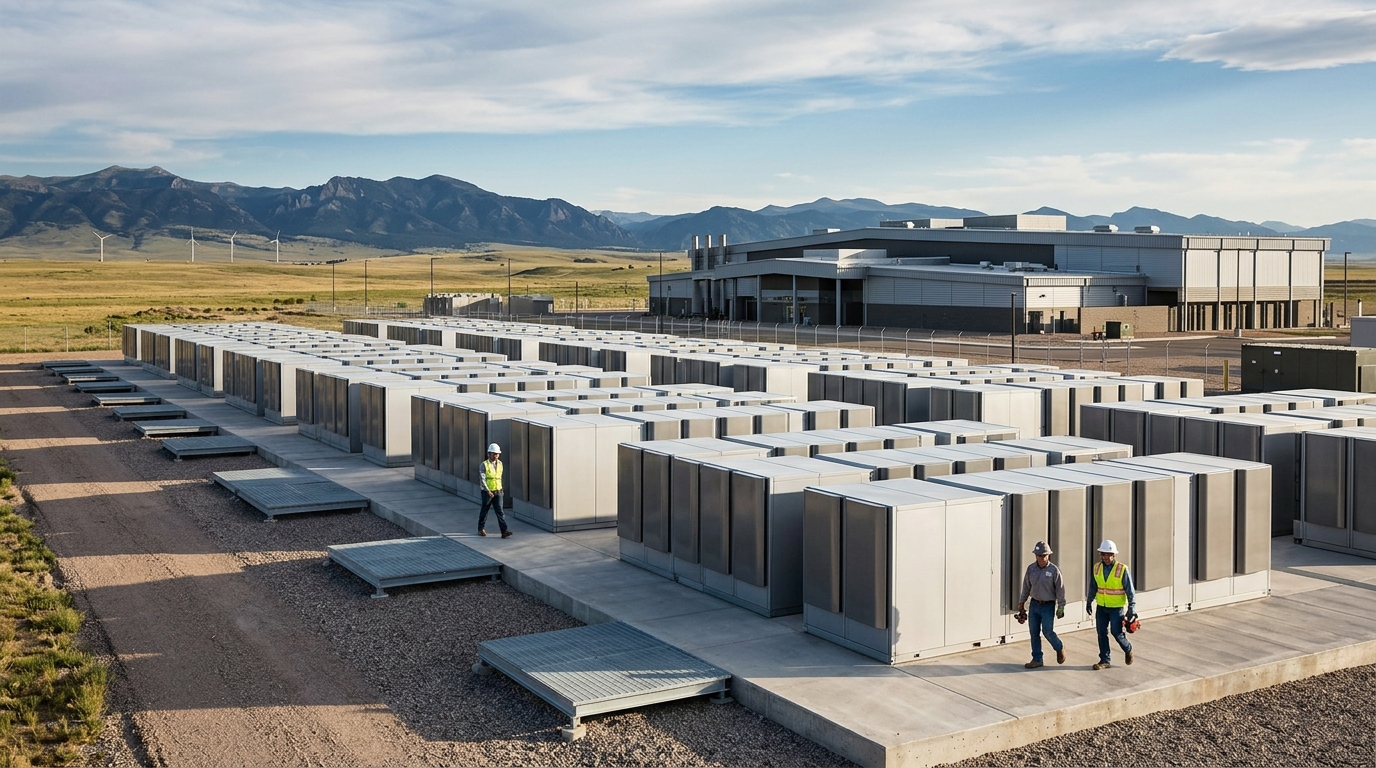
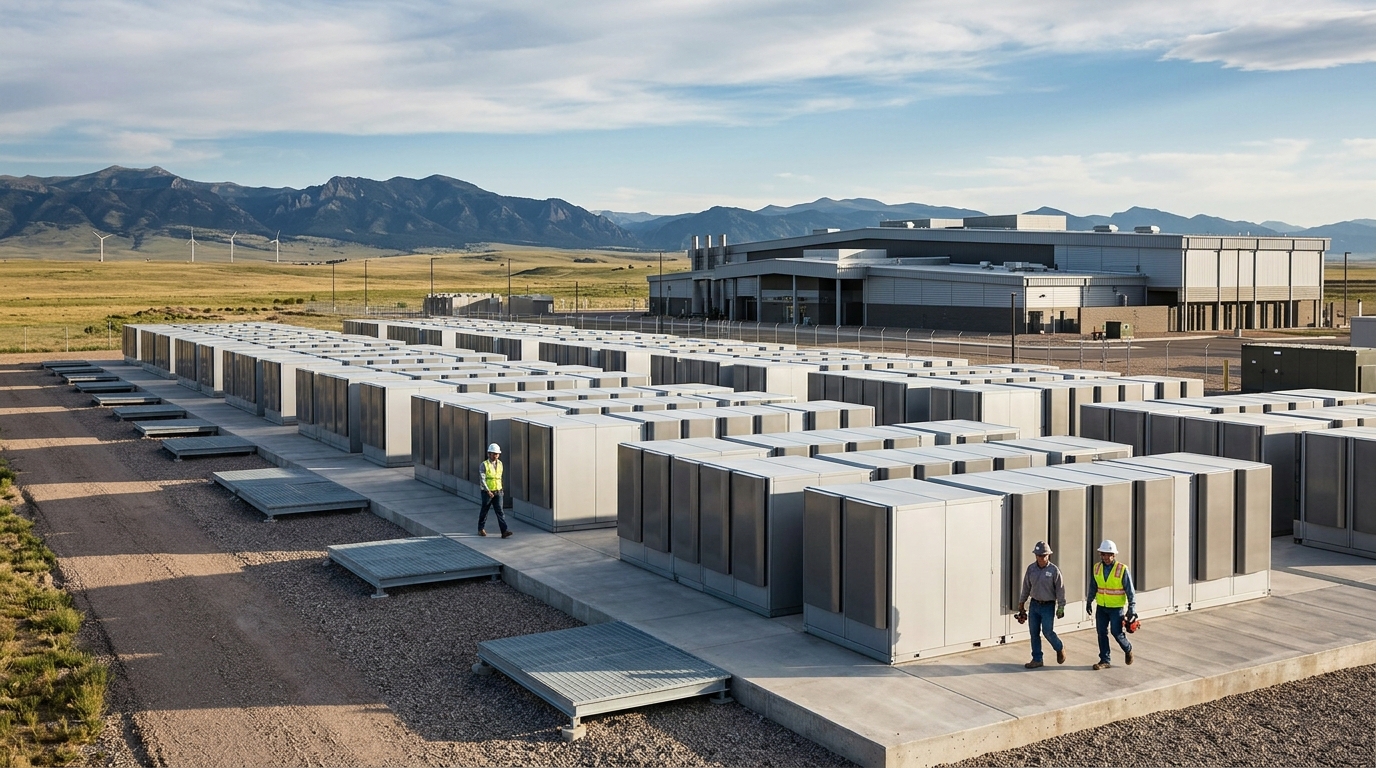
One single purchase order from Google changed the economics of the fuel cell industry. When AEP announced on October 14, 2026, that it will invest approximately $4 billion to build a 702-megawatt fuel cell plant near Cheyenne, Wyoming, under a 20-year power purchase agreement with Google, it was not just a headline about a utility taking on a big customer. It was proof that fuel cells have crossed the threshold from commercial demonstration to infrastructure-grade generation. The equipment supplier named in the announcement was Bloom Energy.
What Is Actually Being Built
Google signed a 20-year power purchase agreement with AEP to offtake power from the 702MW Cheyenne facility, which AEP will hold an approximately 92% stake in through a project entity called Cheyenne Fuel Cell, LLC. The fuel cells will be supplied by Bloom Energy. AEP plans to commence construction in 2026, with the facility expected to reach full operations by the end of 2028.
The Cheyenne plant does not stand alone. Black Hills Corp. announced definitive long-term agreements, effective September 30, 2026, to supply power to Google’s planned Cheyenne data center through 2048, via a Large Power Contract Services Agreement and a Generation Facilities Agreement. The utility will deliver up to 590 MW of grid-connected energy service and manage an additional 2.1 GW of third-party Wyoming-based resources through a private microgrid. Black Hills described the total resource mix for the project as 2.7 GW, including reserve margins. Two utilities, two separate deals, one campus. The scale of the power commitment makes the Cheyenne site one of the largest single-customer generation projects in U.S. history.
Why Bloom Energy Is the Story
The angle the market has largely missed is not AEP’s capital commitment or even Google’s appetite. It is the supplier bottleneck. Bloom Energy is not one of several firms that could fill this order. It is the firm. The planned facility will use fuel cell technology developed by Bloom Energy, which generates electricity from natural gas without combustion, aiming to provide reliable, on-demand power for large customers.
Bloom Energy has said it is on track to double its annual production capacity to reach 2 GW by the end of 2026. That factory ceiling matters because the Cheyenne plant alone absorbs a large share of that annual output before a single other customer is served.
The Numbers Behind the Growth
The revenue trajectory at Bloom is not incremental. Revenue reached $2.02 billion in 2025, an increase of 37.3% compared to $1.47 billion in 2024. Then the acceleration steepened. Revenue in the second quarter of 2026 hit $1,065.4 million, up 165.5% year over year, with product revenue of $935.4 million up 215.4%. Management raised its full-year 2026 revenue outlook twice, in April to $3.4 billion to $3.8 billion, and in July to $3.9 billion to $4.2 billion, roughly double last year’s total at the midpoint.
Total current backlog stood at approximately $20 billion at year-end 2025, with current product backlog of about $6 billion, up roughly 2.5 times year over year. Gross margin reached 29.0% in 2025, up 1.6 percentage points from 27.5% in 2024. The Cheyenne contract, not yet in the backlog when those figures were reported, means that number is likely already dated.
Risks Worth Watching
The growth is real but so are the execution risks. Bloom is betting its 2GW factory ramp on a handful of very large customers. That concentration deserves attention: if a major deployment slips or a project financing vehicle stalls, the headline revenue could move before the underlying demand does.
AEP itself is operating in unusual territory. A regulated utility building dedicated generation for one tech customer outside its rate base carries its own regulatory and financing questions, but the Cheyenne plant is structured as an unregulated, contracted asset, paid for by Google rather than ratepayers.
The Cheyenne structure is not the only template hyperscalers are using to secure dedicated generation. Southern Company just contracted 3.2 gigawatts for a single hyperscale customer under a model that keeps costs inside the rate base rather than outside it.
The Bigger Picture
The Cheyenne campus represents something new: a hyperscaler commissioning its own generation stack, with utilities serving as project developers rather than grid operators. AEP brings the balance sheet and the operating license. Black Hills brings the local infrastructure and management fees. Google has already advanced $399 million so Black Hills can procure long-lead equipment. Hyperscalers are now financing utility construction years in advance.
For Bloom Energy, the AEP-Google order functions as a market validation that no press release could manufacture. A regulated utility staked approximately $4 billion on solid-oxide fuel cells, named one supplier, and plans to start construction in 2026. The list of companies capable of filling that kind of order at that scale is very short. Right now, it is a list of one.
 Rising Star Stocks