Below is an important message from one of our highly valued sponsors. Please read it carefully as they have some special information to share with you.
** If you’re within miles of one of these dots you could see your electric bill increase. **
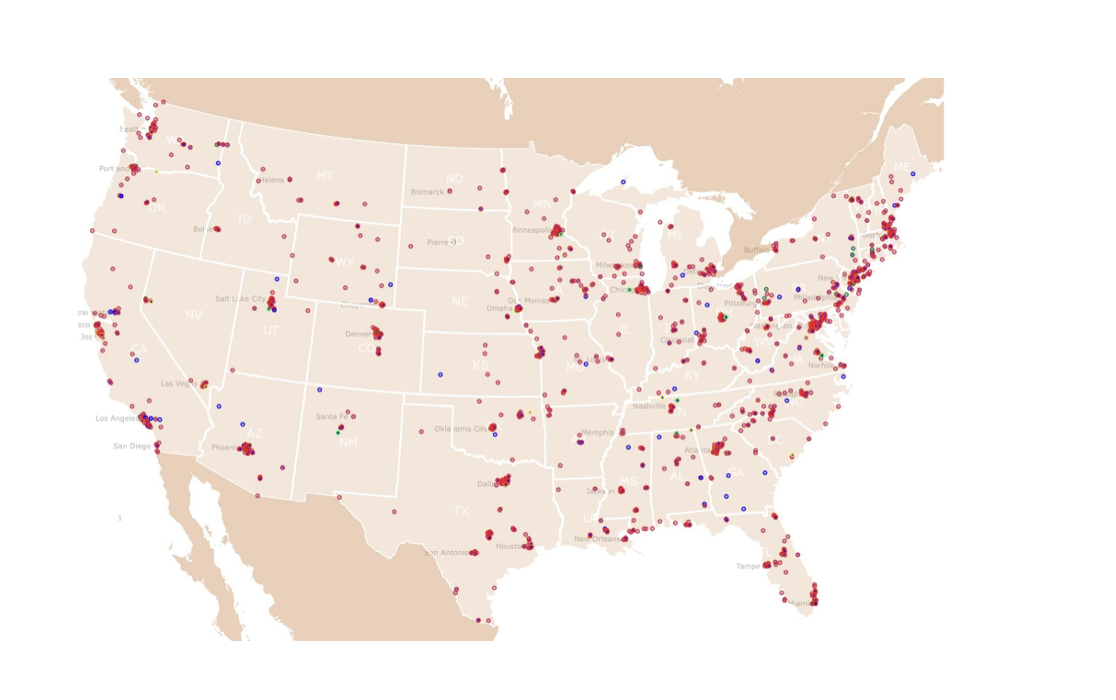
These are data centers. Warehouses full of computers, built to run AI.
There’s about 1,300 operating in America right now.
A single one can draw as much electricity as 100,000 homes.
In Manassas, Virginia, a man who’s lived in the same house for 40 years opened a $281 electric bill in January.
The month before, he paid about $100.
And this is just the beginning.
Another 2,500 data centers are set to be built in the coming years.
It’s only a matter of time before all of us feel this. If you haven’t already.
So who’s going to stop it?
I can tell you it isn’t your congress man. It isn’t your senator.
There’s exactly one person who can. And he’s not in government. Elon Musk. His new “hidden” project would take data centers out of our cities entirely
He’s already filed his plan to do this with the FCC.
And Trump has been in full support of this,, so that you don’t get hit with rising electric bills in the coming years.
And this goes one step further.
Which is the real reason I’m writing to you today.
We’re at the ground floor of a problem only Elon can solve.
And there’s one company I believe is sitting at the center of his solution.
It’s a company 99% of people have no idea exists, let alone has Elon’s name attached to it.
It’s publicly traded, and it costs less than $100 a share.
Imagine getting in on the ground floor of PayPal. Tesla. SpaceX.
That’s exactly where we are right now with his next project.
And this one could not only be his last… but it could be BIGGER than all of his past projects combined.
Learn how to get positioned before December 8th.
> GET POSITIONED BEFORE DEC 8 <
Sincerely,
James Altucher
Abbott’s $968M Cancer Quarter Hinges on One Unresolved Question
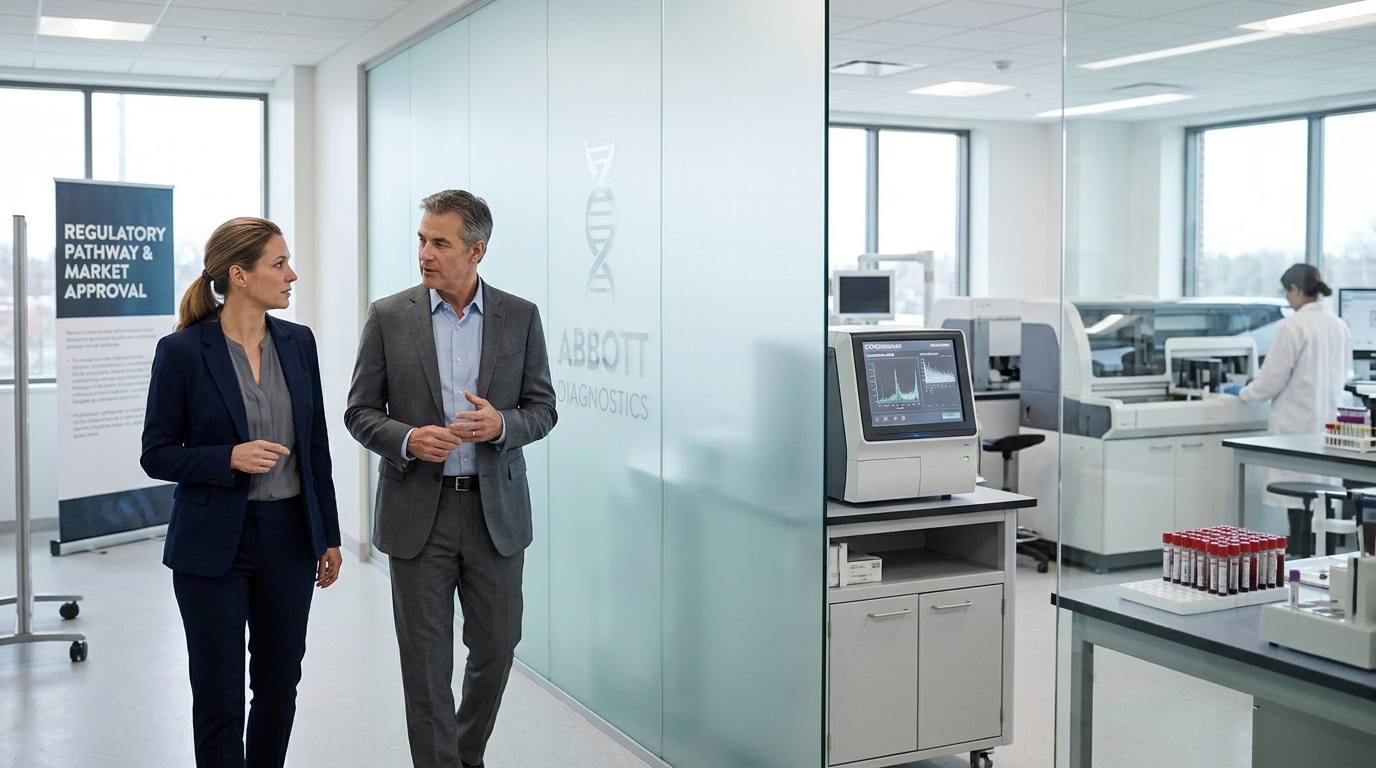
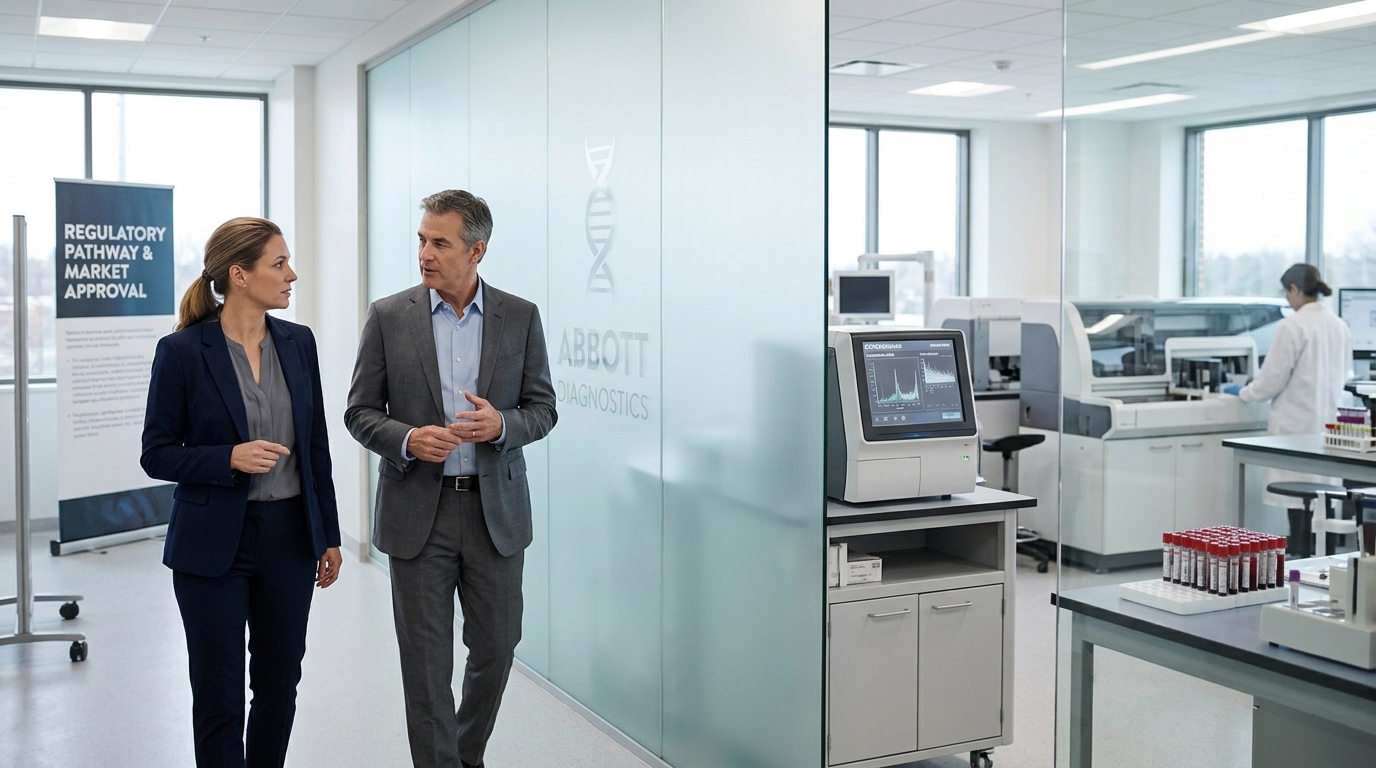
Abbott Laboratories just posted a $968 million Cancer Diagnostics quarter, growing 13.8% on a comparable basis. That number is real, and it is accelerating. But it rests on a platform that regulators have not yet cleared, sold at a price most insurers will not cover, and facing a reimbursement structure that does not yet exist.
The tension between those two realities is the most interesting thing in ABT right now.
What the Test Actually Does
Abbott’s Cancerguard is commercially available but carries an important asterisk: it is offered as a laboratory-developed test under CLIA regulations, not an FDA-cleared product. The distinction matters. Cancerguard screens for signals associated with more than 50 cancer types and subtypes from a single blood draw, combining two distinct biomarker classes: DNA methylation patterns and tumor-associated proteins. Abbott has said it is currently the only commercially available multi-cancer early detection test designed with that dual biomarker-class approach.
At AACR in April 2026, Abbott presented new data showing why that dual approach matters. In a prospectively collected cohort, Abbott highlighted that methylation and protein signals contribute in complementary ways to detection. Overall specificity was reported around 97.4%, and sensitivity for the six most lethal cancers was reported in the mid-60% range.
In the DETECT-A follow-up outcomes paper, all treated patients with stage I or II cancers detected through a multi-cancer screening approach remained alive and cancer-free at a median of more than four years after study enrollment.
The Regulatory and Reimbursement Choke Point
Cancerguard costs $689 out of pocket. Insurers broadly do not cover it today. The test is indicated for adults aged 50 to 84 with no known cancer diagnosis in the last three years, a population numbering in the tens of millions in the U.S. alone, but uptake at $689 per test will always be self-limiting.
The unlocking mechanism is legislation, not science. The Nancy Gardner Sewell Medicare Multi-Cancer Early Detection Screening Coverage Act establishes a Medicare coverage framework for MCED tests following FDA approval and subsequent CMS implementation. Bipartisan support is well documented. But the path still runs through FDA approval first, and Cancerguard is not yet an FDA-approved product.
FDA review timelines have a way of reshaping commercial assumptions well before a decision arrives. Exelixis learned how a single major amendment can push a PDUFA date by three months and reprice a stock trading near its highs.
Until it does, the addressable market is wealthy, self-pay patients. That is a niche, not a platform.
How the Numbers Hold Together Anyway
Abbott acquired Exact Sciences, Cancerguard’s developer, on March 23, 2026 for approximately $20.6 billion, funded through a combination of cash on hand and debt financing. The deal also brought Cologuard and Oncotype DX into the portfolio. In Q3 2026, Cancer Diagnostics sales were $968 million. The filing does not break out Cancerguard separately.
September’s launch of SimpleScreen CRC, an FDA-approved, blood-based colorectal cancer screening test validated in a study enrolling more than 48,000 adults, adds another layer to the portfolio. Abbott has reported 81.1% overall sensitivity for colorectal cancer in that study. Abbott now holds instruments across the early detection spectrum, from CRC blood tests to 50-plus-cancer screens.
The Risk Worth Watching
Abbott is carrying roughly $20 billion in acquisition-related debt, paying for a portfolio whose highest-potential product still lacks FDA approval and broad payer coverage. If the regulatory timeline slips, or if Medicare reimbursement takes longer than the market expects, the 13%-plus cancer diagnostics growth rate could compress before Cancerguard reaches its scale. That is not a reason to dismiss the platform. It is a reason to watch the FDA calendar as closely as the revenue line.
The reimbursement question is inseparable from the manufacturing and pricing assumptions that underpin any oncology platform valuation. Moderna’s melanoma math shows how a single Phase 3 result can swing a market cap by tens of billions before payer coverage is settled.
 Rising Star Stocks