August 30, 2026
European gas prices have doubled in 2026. Cheniere Energy Partners collects a fixed toll on every cargo and the market hasn’t caught up.
Europe is running out of time to fill its gas tanks. Reuters and other market reporting have highlighted that Dutch TTF futures were up roughly 120% year-to-date in mid-August 2026, with front-month pricing around the mid-€60s per megawatt-hour. On Monday, August 24, European gas jumped again toward the high-€60s/MWh range as fresh Iran sanctions fears pointed to tighter Middle East supply.
The storage math is stark. Public trackers based on the AGSI+ data show EU gas storage around 61.8% full in the third week of August 2026, sitting well below the five-year seasonal average. At the same time, Europe has been competing more aggressively for LNG cargoes, and regulators have warned that hitting the EU’s 90% storage target by November 1 likely requires LNG imports to rise by about 13% versus 2025 levels, while an 80% level is more achievable at roughly 2025 import rates, according to ACER.
The regulatory pressure underneath all of this is structural and one-directional. On January 26, 2026, EU member states formally adopted Regulation (EU) 2026/261, putting a stepwise phase-out of Russian gas into EU law. Under that framework, a full ban for Russian LNG under long-term contracts applies from January 1, 2027, and pipeline gas under long-term contracts is set to be prohibited from September 30, 2027, with a potential backstop of November 1, 2027 under specific storage-risk conditions. And yet market data services have reported that EU imports of LNG from Russia’s Yamal project rose to about 10 million metric tons in the first half of 2026. The paradox is temporary. When Russian LNG is cut off under the long-term-contract ban starting January 1, 2027, the replacement volumes have to come from somewhere.
The Rising Star: Cheniere Energy Partners (NYSE: CQP)
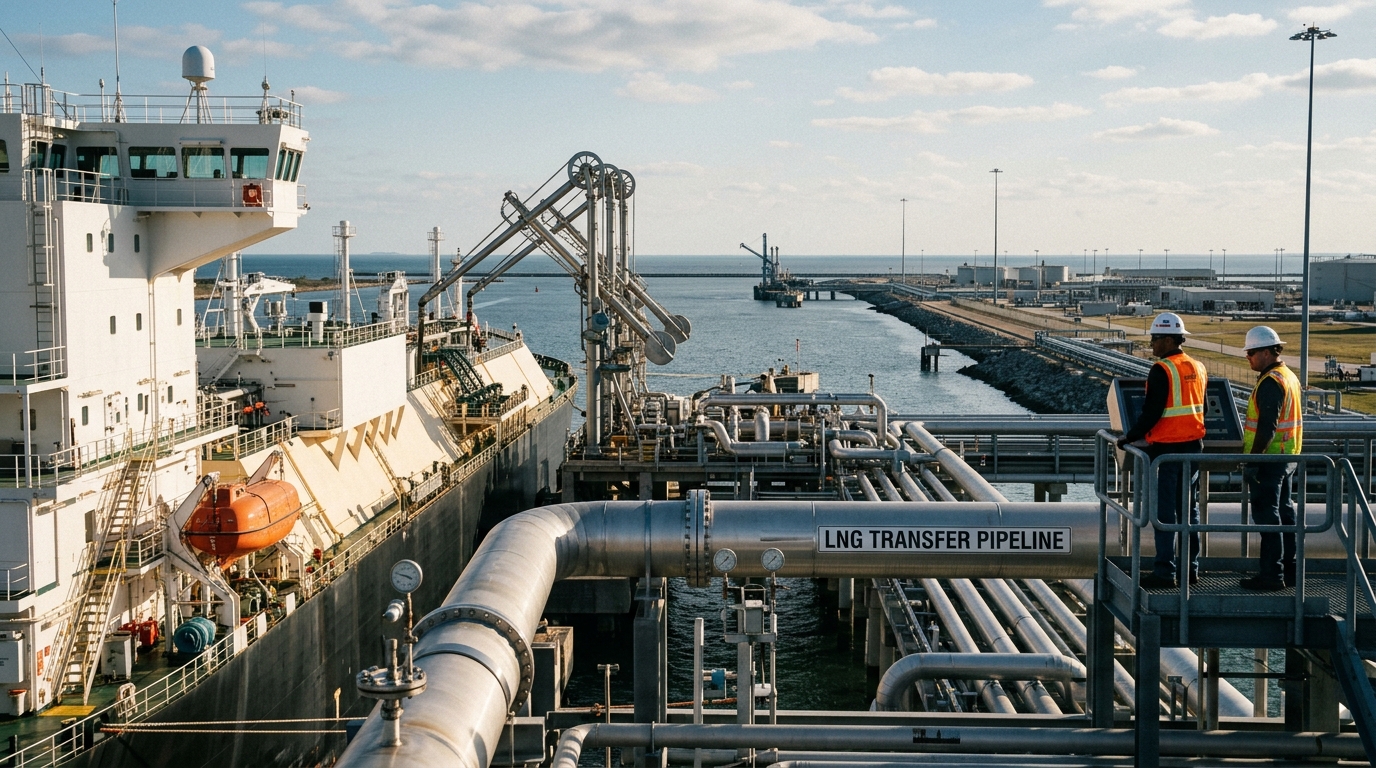
The stock most directly exposed to what happens next is not a major oil company or a pipeline conglomerate. It is Cheniere Energy Partners (NYSE: CQP), the publicly traded partnership that owns and operates the Sabine Pass LNG terminal in Cameron Parish, Louisiana. The Sabine Pass terminal has six operational liquefaction trains with aggregate nominal production capacity of about 30 million tonnes per annum.
CQP generates most of its revenue through long-term contracts with customers on a fixed- and variable-fee structure, and it can sell uncontracted LNG on a shorter-term basis. That fee model is the key. When TTF moves, CQP generally is not the one wearing the commodity price risk. Its contracted buyers do. What CQP collects is the toll.
The Tech IPO Set to Be 41X Bigger Than the Google, Microsoft, and Amazon IPOs Combined
Nvidia, Google, Amazon are all loading up on shares.
Here’s a secret backdoor in for regular investors. [Free Ticker]
The Numbers the Market Has Not Updated
The Q2 2026 results, filed August 6, show the toll road is running faster than investors expected. In its second-quarter release, Cheniere Partners reported LNG volumes loaded and recognized of 396 TBtu, up 13% year-on-year, and adjusted EBITDA of $983 million, up 35%. It also reconfirmed full-year 2026 distribution guidance of $3.10 to $3.40 per common unit.
For the first half of 2026, Cheniere Partners reported revenues of $6.2 billion and adjusted EBITDA of $2.2 billion.
The expansion pipeline reinforces the volume growth angle. In May 2026, Sabine Pass Liquefaction Stage V entered into a lump sum, turnkey EPC contract with Bechtel for Phase 1 of the Sabine Pass expansion, and issued a limited notice to proceed authorizing early engineering and procurement work.
Meanwhile, the parent company’s Q2 reading gives the broader context. In its second-quarter release, Cheniere Energy raised full-year 2026 consolidated adjusted EBITDA guidance to $7.90 billion to $8.40 billion and distributable cash flow guidance to $5.30 billion to $5.80 billion. The company has also described the first phase of the Sabine Pass expansion as expected to increase capacity by more than 6 million tonnes per annum over time.
Nvidia About to Crash? Predictive AI Tech Issues Forecast That Could Shock Entire Market
The same AI tech used to prevent heart failure and grid blackouts can now “see ahead” in the U.S. stock market in a way that sounds like science fiction.
The Strategic Angle
CQP sits at the Atlantic basin intersection of three converging forces: a European buyer with a legal mandate that points to a full LNG ban under long-term contracts from January 1, 2027; a storage deficit that ACER has framed as requiring roughly 13% higher LNG imports versus 2025 levels to hit the 90% storage target by November 1; and a fee-stream model that converts higher urgency into volume demand without taking the price risk itself.
If the EU continues to deepen its reliance on U.S. LNG through existing and new supply agreements, Sabine Pass is positioned as one of the key Atlantic basin export outlets for that structural shift.
CQP’s valuation also looks different when you frame it as contracted infrastructure rather than a commodity bet. Around mid-August 2026, CQP’s trailing price-to-earnings ratio was about 12.5x, based on commonly cited market data.
Risks Worth Watching
The risks are real. As Asian prices moved to a premium over Europe in Q2, Cheniere executives said on the August 6 earnings call that U.S. LNG flows shifted decisively east, with exports to Asia reaching a quarterly record of about 11 million metric tons while deliveries to Europe declined materially. That arbitrage swings both ways, and a warm European winter would reduce the urgency premium baked into TTF.
971 Trades. One Surprisingly Simple Approach.
Five years. Bull markets, selloffs, sideways stretches – and 971 trades along the way. Dave Aquino’s Ultimate Income System focuses less on predicting the next big move and more on finding consistent trading opportunities. His new report explains the approach, why it works differently, and what most traders may be missing.
The Sabine Pass expansion still requires a final investment decision targeted for early 2027. Construction timelines carry execution risk. And CQP’s limited-partnership structure means distributions, not buybacks, are the primary return mechanism, which makes it a different instrument than Cheniere’s parent equity.
The Bigger Picture
The Russian gas phase-out is not a soft target. It is a prohibition with specific dates embedded in EU law. For LNG under long-term contracts, January 1, 2027 is the key inflection.
Between now and then, every cargo that leaves Sabine Pass for a European regasification terminal is being priced in real time against a more stressed market than it was earlier this year. CQP collects the fee. The contracted volume is growing. The market has not yet connected those dots to the distribution yield. That window tends not to stay open for long.
 Rising Star Stocks