
October 28, 2026
Bonus Content: JetBlue Recaptured 87% of a Fuel Shock. The Network Bet May Be Working.
Most traders have never noticed the weird market anomaly that happens at 9:35 AM every morning.
They’re too busy with lagging indicators trying to predict the next move… when the market makers have already set the tone for the trading day.
It’s this weird anomaly that points us to the market maker’s key levels above and below.
And by playing the move within that range…
Regular folks like you have been able to reach for $100 or more (on a $1K stake) over 600 times in the last 2 years.
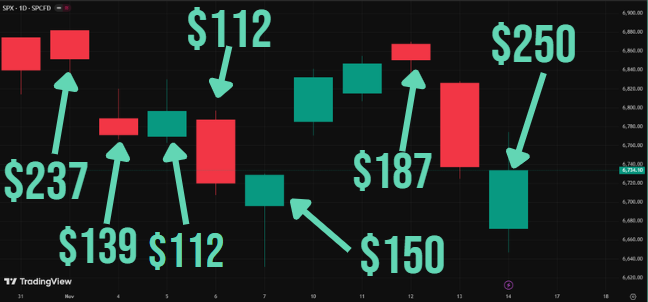
We’ve seen this straightforward approach play out whether the market broke out… broke down… or stayed choppy.
Granted, I can’t make trading guarantees here.
But I’ve opened up the data behind those trades, as well as how you can get in on the very next morning opportunity.
You’ll find the full details right here.
See you in the market.
Chris Pulver
JetBlue Recaptured 87% of a Fuel Shock. The Network Bet May Be Working.
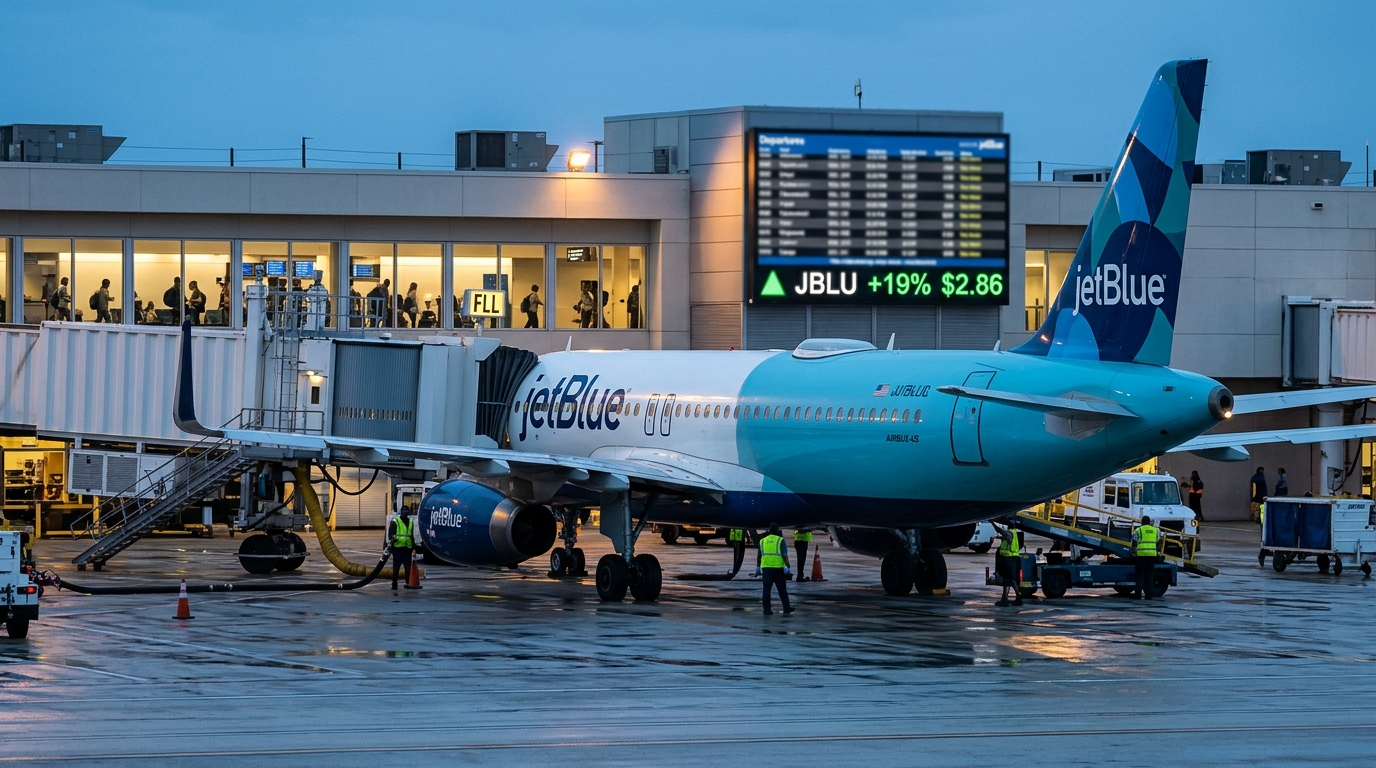
Jet fuel at $3.91 a gallon, up 57% from a year ago, should have crushed JetBlue’s third quarter. Instead, the airline recaptured roughly 87% of those higher costs through revenue, posted unit revenue growth that management said put it among the industry leaders, and watched its stock soar about 19% on Tuesday to $2.86. That is not a dead-cat bounce. That is a revenue engine finally turning over.
What the Numbers Actually Say
Revenue per available seat mile rose 18.4% year over year in Q3, coming in roughly four points above the midpoint of JetBlue’s own initial guidance. System operating revenue reached $2.812 billion, representing 21.1% year-over-year growth. Both premium and main cabins delivered double-digit RASM gains, and management noted no meaningful demand softening despite higher fares.
The headline loss still widened. Adjusted EPS came in at a loss of $0.60 versus the $0.55 analysts expected, with fuel pressure accounting for most of the gap. But the market looked past that. When revenue velocity is running this far ahead of cost headwinds, the sequential margin trajectory matters more than the absolute number.
The Fort Lauderdale Wager
The real story inside these results sits at FLL. Fort Lauderdale capacity expanded more than 65% year over year in Q3, a bet that would look reckless in most conditions. RASM there rose nearly 15%, accelerating from 11% growth in Q2 and 5% in Q1. That three-quarter trend line is not noise. It is a network compounding on itself.
JetBlue’s seat share at Fort Lauderdale is on track to reach roughly 37% in Q4, up 14 points year over year. Co-brand card acquisitions in Broward County climbed 55% year over year in Q3 alone. When loyalty economics start moving alongside capacity, the unit economics argument for the hub gets considerably harder to dismiss.
Q4 Guidance and the Creditor Overhang
Management guided Q4 RASM growth of 18% to 22%, an acceleration from Q3. The airline also expects 1 to 2 points of year-over-year operating margin expansion in the quarter, even against a tougher comparison and continued fuel pressure. Four consecutive quarters of improving RASM growth, capped by forward guidance that pushes the range higher again, is a durable pattern.
The shadow over all of it: a Wall Street Journal report that senior creditors engaged restructuring advisers PJT Partners and law firm Akin Gump. CEO Joanna Geraghty moved quickly to address it directly. “We are not in talks with our creditors,” she told Reuters on Tuesday, adding that the company is not considering a debt restructuring. The airline pointed to $2.2 billion in liquidity at quarter-end, including a $600 million undrawn credit facility, and an unencumbered asset base of approximately $7 billion.
The debt load compounds that risk in the current rate environment. A 10-year Treasury yield above 5% has already tightened financial conditions for leveraged borrowers well before any Fed decision lands.
Risks Worth Naming
JetBlue has not posted an annual profit since 2019. Total debt and finance lease obligations stood at about $8.4 billion as of September 30. Fuel at current levels creates roughly 3.5 points of pressure on the full-year adjusted operating margin outlook, which management revised to negative 4.5% to 6.5%. The path to the company’s own target of at least $1 EPS and positive free cash flow by 2028 requires fuel to cooperate, costs to stay disciplined, and Fort Lauderdale to keep performing. That is a lot of variables.
The creditor situation also bears watching regardless of management’s denial. When senior lenders organize advisers, the message to equity holders is rarely benign even if restructuring is not imminent.
The Bigger Picture
The turnaround question for JetBlue has always been whether the JetForward transformation could generate enough revenue momentum to outrun structural cost pressure. Q3 suggests it can, at least in the near term. If Q4 RASM lands in the guided range and margins continue to expand year over year, the operating profitability target for 2027 moves from aspiration toward plausible. That is a meaningful shift in the probability distribution for a stock that was trading near all-time lows 48 hours ago.
JBLU may be worth keeping on the radar. It is not a clean story, and the debt load is real. But an airline that can grow Fort Lauderdale more than 65% and still expand RASM by nearly 15% in the same market is doing something right with its network. That deserves a second look.
 Rising Star Stocks