September 1, 2026
China-linked bots amplify data-center backlash and 75 projects stall
The AI buildout was supposed to be a race for chips and capital. It has become a fight over zoning hearings and electrical interconnection queues. That shift is more consequential for investors than most people appreciate.
When Opposition Becomes a Financial Risk
On Thursday, August 28, X disclosed it had identified a suspected Chinese bot farm of roughly 200,000 accounts, with 200 of them pushing anti-data-center content into American social media feeds. The posts concentrated on electricity prices and grid strain, grievances that are real regardless of who amplifies them. Axios reported Friday that several Wall Street banks have recently cited this political opposition as a risk to the AI sector. OpenAI documented similar Chinese-linked covert networks in a June 2026 report, noting operators used fabricated material and genuine news stories about grid capacity auctions to stoke resistance.
The organic opposition needs no foreign amplification. An Annenberg Public Policy Center survey from the University of Pennsylvania found 61% of Americans oppose new data centers in their area, up 12 percentage points from a February and March survey. A YouGov analysis published last week reported that 47% of Americans say building new data centers is bad for the country.
Wall Street is now quantifying the cost. Data Center Watch counted at least 75 projects worth approximately $130 billion blocked or delayed in just the first quarter of 2026, roughly matching the total for all of 2025, compressed into three months. Active opposition groups more than doubled to 833 across 49 states. More than 300 state bills were filed in the first six weeks of 2026 alone, with outright moratorium proposals introduced in 14 states.
After “33X” call, Hall of Fame Trader Jon Najarian reveals NEW Tesla prediction…
Jon Najarian put his neck out on national TV for Tesla in 2014… Before Tesla stock flew to peak gains of 3,392% today! But this “33X” call on Tesla might pale in comparison to Jon’s newest prediction about Elon Musk… That a potential $44 TRILLION plan could be coming next.
The Stock That Gets Paid When Siting Fails
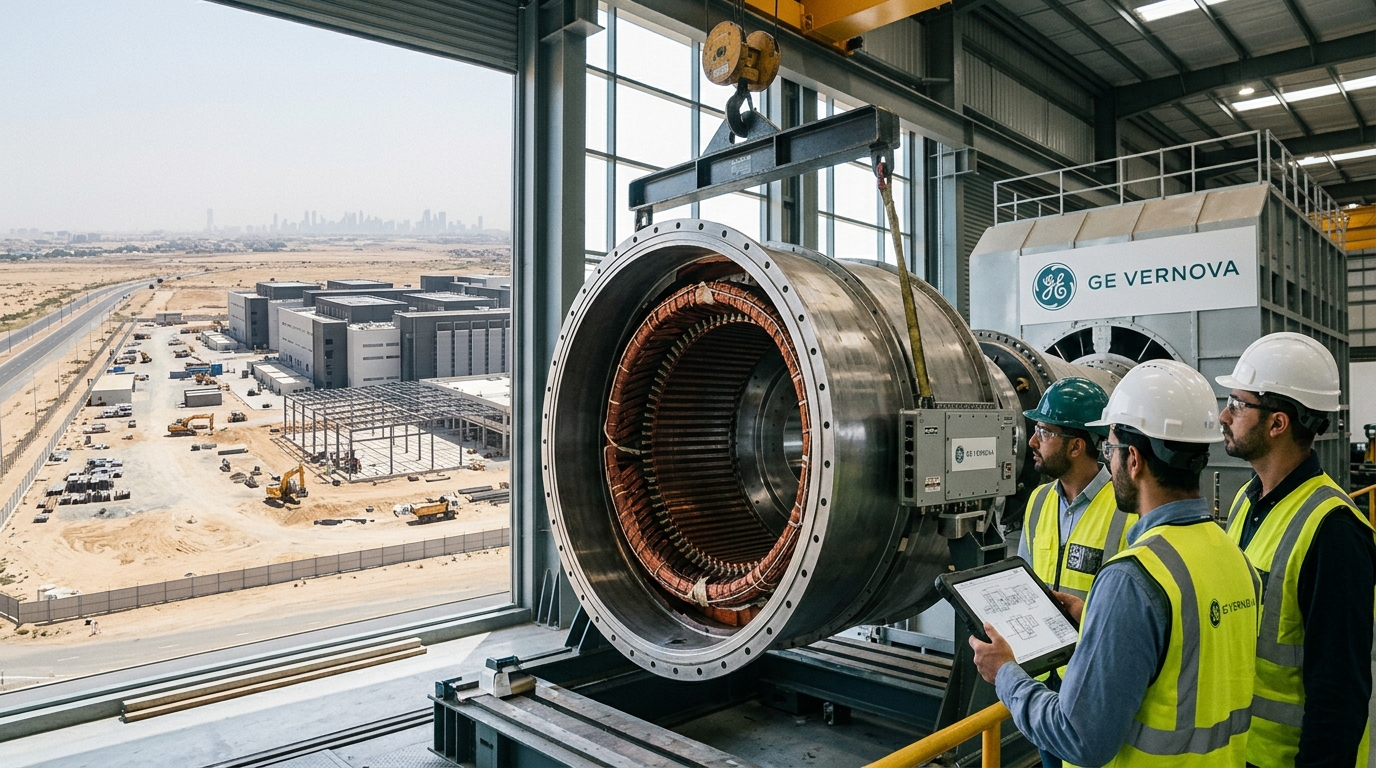
Most investors look at this and see risk to Microsoft, Meta, Alphabet, and Amazon. That is correct. But there is a company on the other side of the trade: GE Vernova (NYSE: GEV).
The central logic is simple. Grid interconnection queues in Northern Virginia, the world’s largest data center market, are now widely described as running about seven years. Developers who cannot get permitted land or grid access in a contested jurisdiction have one other option: bring power to the site themselves. That is precisely what GE Vernova sells.
Its aeroderivative gas turbines can be deployed at or behind the meter, bypassing grid constraints and bringing capacity online in weeks rather than years, according to the company. Onsite power generation also insulates operators from the rising electricity costs that bot farms and local activists correctly point to: Goldman Sachs told clients in a February 2026 research note that electricity prices rose 6.9% year-over-year in 2025, with further increases expected as AI facilities drive demand growth.
Data-Driven Deep Dive
The quarterly numbers make the case directly. In Q1 2026, GE Vernova’s electrification segment booked $2.4 billion in equipment orders to support data centers, more than all of 2025 in a single quarter. Q2 was stronger still: orders surged 88% year-over-year to $24.2 billion overall, revenue reached $11.1 billion, up 12% organically, and adjusted EBITDA margin expanded 340 basis points to 11.3%.
Author of Get Rich with Dividends Is Giving Away His Ultimate Dividend Package FOR FREE!
Click Here to Get Marc Lichtenfeld’s Ultimate Dividend Package, Including Details on His #1 Dividend Stock… the Safest 9% Dividend in the World… the Top Three “Extreme Dividend” Stocks… and Much, Much More.
The backlog is the real story. It hit $176 billion at the end of June, up $13 billion sequentially, and management expects to reach $200 billion in 2027. Gas turbine commitments, defined by the company as backlog plus slot reservation agreements, grew from 100 to 116 gigawatts in the quarter, with guidance targeting at least 125 GW by year-end 2026. New turbine pricing is running 10% to 20% higher on a dollar-per-kilowatt basis than late 2025 orders. Full-year 2026 revenue guidance was raised to $45.5–$46.5 billion.
Free cash flow reached $5.1 billion in Q2 alone. The company said that was more than all of 2025. GE Vernova returned $3.9 billion to shareholders year-to-date as of its July 22, 2026 report.
Risks Worth Watching
The Q2 earnings per share figure missed Wall Street’s estimate by roughly 19%, sending shares lower the morning of the report. Wind segment losses and tariff costs are pressuring margins in that division. The company’s valuation has drawn attention from analysts noting significant insider selling in recent months.
Wall Street Is Waiting for Washington’s Next Crypto Move
The CLARITY Act could reshape how major financial institutions participate in crypto. And while firms like Goldman Sachs, J.P. Morgan and Citadel are already active across digital assets, our team believes one little-known altcoin could stand out as clearer rules bring more institutional capital on-chain.
Discover the overlooked altcoin we believe could benefit from crypto’s next regulatory chapter.
Execution on a gas-plus-nuclear hybrid project in Texas with Blue Energy, pairing GEV’s 7HA.02 turbines with small modular reactors, is a first-of-its-kind undertaking. Delays or cost overruns there could weigh on sentiment. And if data center opposition softens, say, because federal permitting reform accelerates, the urgency driving onsite power demand could ease somewhat.
The Bigger Picture
The buildout conflict is not resolving quickly. Communities have internalized an opposition playbook, as Data Center Watch put it, and legislative sessions have introduced formal regulatory uncertainty across nearly every state. Hyperscalers are projected to spend $690 billion on capital expenditures in 2026.
The company that can deliver reliable power without requiring a seven-year grid queue or a cooperative county council is not a secondary beneficiary of the AI boom. In a world where siting is the binding constraint, it may be the primary one. GEV is worth watching closely as Q3 data rolls in.
 Rising Star Stocks